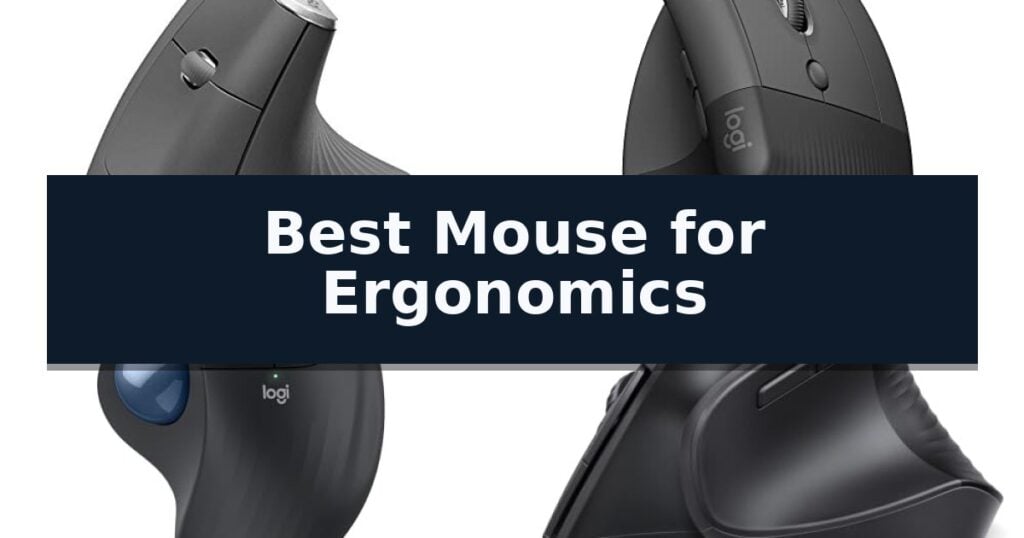
Logitech MX Vertical Wireless Mouse is our top choice for the Best Mouse for Ergonomics because its 57-degree vertical angle is specifically engineered to reduce muscular activity and wrist pressure compared to standard designs. For users with smaller hands, the Logitech Lift Vertical Ergonomic Mouse offers a more tailored fit, while the Logitech Ergo M575S Wireless Trackball Mouse provides a stationary alternative that minimizes arm movement entirely.
Transitioning to an ergonomic mouse requires a brief adjustment period as your hand adapts to a more natural, handshake-like posture. While vertical mice prioritize forearm alignment, trackball models shift the burden of cursor control from the wrist to the thumb, effectively eliminating the need for broad sweeping motions across your desk surface.
When selecting the right device, consider your primary workspace constraints and how much desk real estate you have available. Features like wireless connectivity, button customization, and battery life are secondary to the physical shape, which remains the most critical factor in mitigating long-term discomfort during extended daily use.
If you are focused on precision tasks, our guide on the Best Mouse for Drafting provides additional insights into selecting hardware for detailed design work. For those who spend significant time in creative suites, the Best Mouse for Editing offers recommendations for devices that excel at workflow automation.
10 Best Mouse for Ergonomics in 2026 Reviews
Quick Comparison
| Product | Best For | Key Strength | Score |
|---|---|---|---|
| Logitech MX Vertical Wireless Mouse | Best Overall | 57° vertical angle promotes a more natural wrist posture. | 4.9 |
| Logitech Lift Vertical Ergonomic Mouse | Ideal Fit for Smaller Hands | 57-degree vertical angle promotes a more natural forearm posture. | 4.9 |
| Logitech Ergo M575S Wireless Trackball Mouse | Stationary Control for Tight Spaces | Stationary trackball design saves significant desk space. | 4.6 |
| UGREEN Ergonomic Wireless Mouse | High-Precision Vertical Performance | Vertical handshake design reduces wrist rotation and muscle strain. | 4.7 |
| Lekvey Rechargeable Vertical Wireless Mouse | Budget-Friendly Rechargeable Design | Rechargeable 600mAh battery eliminates recurring battery costs. | 4.3 |
| Anker 2.4G Wireless Ergonomic Mouse | Classic Vertical Handshake Position | Vertical ergonomic design promotes a neutral wrist position. | 4.5 |
| TECKNET Ergonomic Wireless Bluetooth Mouse | Seamless Multi-Device Switching | Vertical ergonomic design reduces wrist pressure. | 4.7 |
| seenda Ergonomic Vertical Mouse | Integrated Media Volume Control | Natural handshake grip to promote neutral wrist alignment. | 4.9 |
| seenda Ergonomic Wireless Bluetooth Mouse | Soft-Touch Grip for Daily Use | 52-degree vertical angle promotes a more natural handshake wrist position. | 4.3 |
| Anker USB Wired Vertical Mouse | Reliable Battery-Free Ergonomics | Promotes a natural handshake position to reduce arm and wrist strain. | 4.4 |
How We Chose
Selecting the right ergonomic mouse requires evaluating how a device physically interacts with your hand and forearm. We focus on the structural design, sensor accuracy, and connectivity versatility, ensuring that each model provides measurable improvements in posture and comfort for daily office or creative workflows.
- Vertical angle and hand posture alignment
- Compatibility with specific hand sizes
- Sensor precision and cursor control customization
- Connectivity options including Bluetooth and dedicated receivers
- Battery life and power management efficiency
1 Logitech MX Vertical Wireless Mouse — Gold Standard for Vertical Comfort
The Logitech MX Vertical Wireless Mouse features a distinct 57° vertical angle designed to promote a natural handshake position, which research indicates reduces muscular activity by 10 percent compared to a standard mouse. This orientation is intended to alleviate pressure on the wrist while maintaining standard functionality.
Engineered with a high-precision 4000 DPI optical sensor, this device aims to minimize hand movement by requiring less physical travel across the desk surface to navigate the screen. Users can utilize the integrated cursor speed switch to instantly adjust DPI settings, allowing for tailored accuracy depending on the current task.
The chassis is shaped to accommodate a variety of hand sizes and includes a textured rubber surface to ensure a consistent grip. Beyond its ergonomic form, the mouse supports multi-device connectivity, enabling users to move content between up to three Windows and Apple computers seamlessly.
This rechargeable peripheral is designed to lower muscle strain and improve overall posture during extended periods of computer use. By prioritizing a more natural alignment of the forearm and wrist, it serves as a specialized tool for those seeking to mitigate the physical fatigue often associated with traditional mouse designs.
Best for: Users seeking to reduce wrist pressure and muscle strain through a vertical, handshake-style grip.
Skip if: Users who prefer a traditional low-profile mouse or those with specific desk space constraints that make a tall vertical form factor impractical.
- 57° vertical angle promotes a more natural wrist posture.
- 4000 DPI high-precision sensor reduces the need for large hand movements.
- Multi-computer control allows for seamless transitions between three devices.
- Textured rubber surface provides a secure and comfortable grip.
- Vertical form factor requires a period of adjustment for users accustomed to traditional mice.
2 Logitech Lift Vertical Ergonomic Mouse — Ideal Fit for Smaller Hands
The Logitech Lift Vertical Ergonomic Wireless Mouse features a distinct 57-degree vertical angle designed to promote a more natural forearm posture during extended computer use. By shifting the hand into a handshake position, this device aims to reduce strain compared to traditional flat mouse designs.
Engineered for comfort, the mouse includes a soft-textured grip and a dedicated thumb rest. It is specifically sized to accommodate small to medium right hands, ensuring that the buttons and scroll wheel remain accessible without overextending fingers. The inclusion of whisper-quiet clicks and a SmartWheel allows for seamless, low-noise navigation across various tasks.
Connectivity is handled through either Bluetooth Low Energy or the included Logi Bolt USB-A receiver, providing flexibility for users across Windows, macOS, iPadOS, Chrome OS, and Linux environments. The unit is powered to last up to two years on a single battery, minimizing the need for frequent maintenance.
Beyond its physical design, the Logitech Lift Vertical Ergonomic Wireless Mouse incorporates sustainability by utilizing certified post-consumer recycled plastic in its construction. It has been developed and tested against criteria established by ergonomists to ensure it meets specific comfort standards for daily office or home use.
Best for: Users with small to medium-sized hands seeking a vertical orientation to improve wrist and forearm posture during daily computer tasks.
Skip if: Left-handed users or those with large hands who may find the specific dimensions and vertical contouring of this model uncomfortable or undersized.
- 57-degree vertical angle promotes a more natural forearm posture.
- Customizable buttons allow for personalized workflow efficiency.
- Dual connectivity options via Bluetooth or Logi Bolt USB receiver.
- Whisper-quiet clicks reduce noise in shared workspaces.
- Right-hand specific design excludes left-handed users.
- Small to medium sizing may not provide adequate support for larger hands.
3 Logitech Ergo M575S Wireless Trackball Mouse — Stationary Control for Tight Spaces
The Logitech Ergo M575S Wireless Trackball Mouse prioritizes desk efficiency by utilizing a stationary trackball, which allows users to navigate their cursor without moving their hand across the surface. This design choice is particularly effective for those working in constrained environments or on surfaces where traditional mouse movement is impractical.
Engineered with input from the Logi Ergo Lab, this device is designed to support the hand and forearm in a more natural posture. By reducing the need for repetitive arm movements, it aims to minimize muscle strain during extended periods of use. The unit features a sculpted shape that accommodates a wide range of hand sizes, focusing on long-term comfort.
Functionality is enhanced through three customizable buttons and the Logi Options+ App, which allows for the configuration of time-saving shortcuts and adjustable cursor speed. The mouse offers versatile connectivity, supporting both Bluetooth and the included Logi Bolt USB receiver. It is powered by a single AA battery, which provides up to 18 months of operation.
Sustainability is integrated into the construction, as the plastic components are manufactured using certified post-consumer recycled plastic. The device is designed to pair seamlessly with ergonomic peripherals like the Wave Keys keyboard to create a cohesive, comfortable workspace setup.
Best for: Users working in small or crowded desk spaces who want to reduce forearm movement and muscle strain.
Skip if: Users who prefer the tactile feedback and rapid, wide-ranging cursor movements associated with traditional optical mice.
- Stationary trackball design saves significant desk space.
- Ergonomist-certified shape helps reduce forearm muscle strain.
- Dual connectivity options via Bluetooth or Logi Bolt receiver.
- Long battery life of up to 18 months on a single AA battery.
- Thumb-operated trackball requires a learning curve for those accustomed to standard mice.
4 UGREEN Ergonomic Wireless Mouse — High-Precision Vertical Performance
Maintaining a natural wrist posture during extended computer use is essential for long-term comfort, and the UGREEN Ergonomic Wireless Mouse addresses this by utilizing a vertical handshake design. By shifting the hand into a more neutral orientation, this device aims to reduce the muscle strain and wrist rotation often associated with traditional flat mice.
Performance is driven by a versatile optical sensor that offers four adjustable DPI levels—1000, 1600, 2000, and 4000—allowing users to toggle between precise editing tasks and faster cursor movements. The inclusion of PTFE glide feet ensures the mouse moves across surfaces with minimal friction, while the silent-click buttons are engineered to maintain a quiet environment during operation.
Connectivity is handled through a dual-mode system, supporting both 2.4G wireless and Bluetooth, which enables the user to switch between up to three different devices seamlessly. The mouse is powered by a single AA battery and incorporates a smart sleep mode to preserve energy when the device is idle. It is fully compatible with major operating systems including Windows, macOS, Linux, ChromeOS, and Android.
Designed specifically for medium to large hands, the chassis measures approximately 4.72 inches in length and 3.39 inches in width. Users should verify their hand size against the manufacturer's provided guide to ensure the vertical form factor provides the intended ergonomic benefit.
Best for: Users with medium to large hands seeking a vertical mouse to promote a more neutral wrist posture during daily office tasks.
Skip if: Individuals with small hands or those who prefer a low-profile, traditional mouse design will likely find this vertical form factor uncomfortable or difficult to grip.
- Vertical handshake design reduces wrist rotation and muscle strain.
- Dual wireless connectivity allows for switching between three devices.
- Adjustable DPI settings up to 4000 for varied precision needs.
- Silent-click buttons and PTFE glide feet for quiet, smooth operation.
- Size constraints make it unsuitable for users with small hands.
- Vertical form factor requires an adjustment period for those accustomed to standard mice.
5 Lekvey Rechargeable Vertical Wireless Mouse — Budget-Friendly Rechargeable Design
The Lekvey Rechargeable Vertical Wireless Mouse is engineered to address the physical strain often associated with traditional computer mice by promoting a neutral "handshake" wrist and arm position. By shifting the angle of interaction, this device encourages a more natural posture that can help mitigate discomfort during extended work sessions. Its specialized vertical orientation is specifically tailored for users with medium to large hands, ensuring that the grip remains comfortable and supportive throughout the day.
Equipped with a 600mAh rechargeable battery, this mouse removes the recurring cost and environmental impact of disposable batteries. A single charge provides between 3 to 4 weeks of power under typical usage patterns, with potential for up to 3 months of operation during lighter activity. The included USB-C charging cable allows for modern, efficient power replenishment, while an integrated auto-sleep mode further preserves battery life by powering down the device during periods of inactivity.
Functionality is highly adaptable thanks to three adjustable DPI levels (800/1200/1600), which allow users to toggle sensitivity settings to match specific tasks, from precision editing to rapid navigation. The mouse also features dedicated "Page Back" and "Page Forward" buttons to streamline web browsing. These buttons are compatible with Windows, Linux, and Mac OS environments, providing a consistent experience across different operating systems.
Setup is designed for simplicity via a plug-and-play 2.4G wireless nano receiver that stores conveniently in the base of the mouse. This driver-free approach ensures immediate functionality upon connection. While the ergonomic design offers significant benefits for wrist alignment, users should note that the buttons are non-programmable, which may limit those who rely on custom workflow configurations for specialized software.
Best for: Users seeking a vertical, rechargeable mouse to promote a neutral wrist posture during daily office or home computing tasks.
Skip if: Users with small hands or those who require programmable buttons, as this model is sized for medium-to-large hands and features non-programmable keys.
- Rechargeable 600mAh battery eliminates recurring battery costs.
- Vertical ergonomic design promotes a neutral handshake wrist position.
- Plug-and-play 2.4G wireless connectivity requires no drivers.
- Adjustable 3-level DPI sensitivity for varied control.
- Non-programmable buttons limit custom workflow configurations.
- Size constraints may be uncomfortable for users with smaller hands.
6 Anker 2.4G Wireless Ergonomic Mouse — Classic Vertical Handshake Position
Maintaining a neutral wrist and arm position during long hours at a desk is essential for comfort, and the Anker 2.4G Wireless Ergonomic Mouse addresses this through its unique vertical design. By encouraging a natural "handshake" posture, this device aims to minimize the strain often associated with traditional, flat-profile computer mice.
This mouse utilizes 2.4 GHz wireless connectivity via a dedicated USB receiver, ensuring a reliable connection for your laptop or desktop. It features 800/1200/1600 DPI Resolution Optical Tracking Technology, which provides adjustable sensitivity to suit different tasks, whether you are navigating complex spreadsheets or browsing the web.
Functionality is enhanced by the inclusion of next/previous buttons, allowing for easier navigation through web pages. The device is designed with energy efficiency in mind, featuring an automatic power-saving mode that activates after eight minutes of inactivity to preserve battery life. A simple click wakes the mouse, ensuring it is ready when you are.
Measuring 120 by 62.8 by 74.8 mm and weighing 3.4 ounces, the mouse offers a substantial yet manageable form factor. It requires two AAA batteries for operation, which are not included in the package. The manufacturer provides an 18-month hassle-free warranty, reflecting a commitment to long-term reliability for daily users.
Best for: Users seeking to reduce wrist strain through a vertical, handshake-style ergonomic grip during extended computer use.
Skip if: Users who require Bluetooth connectivity or prefer a low-profile, traditional mouse design that does not occupy significant vertical desk space.
- Vertical ergonomic design promotes a neutral wrist position.
- Adjustable DPI settings (800/1200/1600) for varied precision needs.
- Automatic power-saving mode extends battery life.
- Integrated navigation buttons for efficient web browsing.
- Requires AAA batteries which are not included.
- USB receiver connection only, lacking Bluetooth support.
- Audible click sounds are present during operation.
7 TECKNET Ergonomic Wireless Bluetooth Mouse — Seamless Multi-Device Switching
The TECKNET Ergonomic Wireless Bluetooth Mouse is designed to alleviate wrist strain by positioning the palm at a near-vertical angle, a significant departure from the flat profile of standard computer mice. This orientation aims to reduce pressure during extended periods of use, making it a specialized tool for those prioritizing comfort in their workspace.
Connectivity is a primary strength of this model, featuring both Bluetooth 5.0/3.0 and a 2.4GHz USB-A receiver for versatile pairing. It supports seamless switching between three devices, allowing users to toggle between connections with a simple button press. The device is powered by two AAA batteries and includes an automatic deep sleep mode that activates after 10-30 minutes of inactivity to preserve battery life.
For precision and adaptability, the mouse offers 6 adjustable DPI levels ranging from 800 to 4800, which can be modified to suit different surface types or task requirements. The integrated silent click functionality for the left and right buttons ensures quiet operation, suitable for shared or noise-sensitive environments. Note that while the device is compatible with Windows, Mac, Chrome, and Linux, the side buttons are not functional on macOS.
Maintenance and longevity are supported by a 36-month warranty upon registration. The unit is designed exclusively for right-handed users, and users are advised to utilize branded batteries to ensure consistent performance. The built-in storage for the 2.4GHz receiver at the base of the mouse helps keep components organized when not in use.
Best for: Right-handed users seeking a vertical ergonomic design with multi-device connectivity for office or study environments.
Skip if: Left-handed users or those requiring full side-button functionality on macOS systems.
- Vertical ergonomic design reduces wrist pressure.
- Multi-device connectivity via Bluetooth and 2.4GHz.
- 6 adjustable DPI levels for customizable sensitivity.
- Silent click buttons for quiet operation.
- Right-handed use only design.
- Side buttons incompatible with macOS.
8 seenda Ergonomic Vertical Mouse — Integrated Media Volume Control
The seenda Ergonomic Vertical Mouse features a distinct vertical orientation designed to promote a natural handshake grip, which helps maintain a neutral, straight line for the wrist and forearm. This design choice aims to reduce physical pressure and discomfort during extended periods of computer use, making it a relevant option for those seeking to minimize wrist strain.
Beyond its shape, the mouse includes a built-in volume control button that allows users to adjust audio, play, or pause media directly from the device. This integration is intended to streamline workflows for streamers and remote workers who need to manage calls or audio without toggling between software windows.
Connectivity is handled through a 3-device multi-connectivity system, supporting both 2.4G USB and two Bluetooth channels. This allows users to switch between a laptop, tablet, and desktop with a single click. The device is powered by a 500mAh rechargeable battery that supports USB-C charging and is rated for up to two months of use on a single charge.
For environments where noise is a concern, the mouse utilizes silent click switches to prevent distractions. It also offers adjustable DPI settings (1000/1600/2400) to accommodate different cursor speed preferences. The unit is compatible with Windows, macOS, iOS, Android, and Chrome OS, providing a broad range of application across various device ecosystems.
Best for: Small to medium-handed users who frequently switch between multiple devices and require integrated media controls to reduce wrist strain.
Skip if: Users with large hands may find the physical dimensions of this model insufficient for a comfortable grip.
- Natural handshake grip to promote neutral wrist alignment.
- Integrated volume control for efficient media management.
- Multi-device connectivity via 2.4G and dual Bluetooth channels.
- Silent click switches for quiet operation in shared spaces.
- Long-lasting battery with convenient USB-C recharging.
- Size constraints limited specifically to small and medium hands.
- Vertical form factor requires an adjustment period for users accustomed to traditional flat mice.
9 seenda Ergonomic Wireless Bluetooth Mouse — Soft-Touch Grip for Daily Use
Maintaining a natural wrist posture during extended office sessions is a primary challenge for many desk users, and the seenda Ergonomic Wireless Bluetooth Mouse addresses this with a distinct 52-degree vertical design. By encouraging a handshake position, this mouse aims to reduce forearm strain compared to traditional flat alternatives, making it a specialized tool for those focusing on daily comfort.
Beyond its physical shape, the device offers versatile connectivity by allowing users to switch between a desktop, laptop, and tablet using a single button. It supports both a 2.4 GHz USB receiver and dual Bluetooth channels, which helps minimize cable clutter on busy workspaces. The inclusion of quiet clicks, tested under 40 dB, makes it a practical choice for shared environments like dorms or offices where noise reduction is a priority.
For navigation and productivity, the mouse features an adjustable DPI setting, letting users toggle between 1000, 1600, and 2400 DPI to suit different tasks, such as spreadsheets or light design work. The side-mounted forward and back buttons provide quick page navigation, though users should note that these specific buttons are not supported on macOS. The matte purple finish and silicone thumb rest are designed to provide a steady, comfortable grip for small to medium-sized hands.
Compatibility is broad, covering Windows 10+, macOS 10.10+, and Android systems. With a lightweight build of 116g, the seenda Ergonomic Wireless Bluetooth Mouse is designed for portability and ease of use across multiple devices. It is a straightforward, functional solution for users seeking to transition to a vertical orientation without complex software requirements.
Best for: Small to medium-handed users seeking a vertical, multi-device wireless mouse for office and study environments.
Skip if: Users who require full button functionality on macOS or those with larger hands who may find the standard dimensions less supportive.
- 52-degree vertical angle promotes a more natural handshake wrist position.
- Multi-device connectivity allows switching between three devices via Bluetooth and USB.
- Quiet click switches operate under 40 dB for noise-sensitive workspaces.
- Adjustable DPI settings (1000/1600/2400) accommodate different task precision needs.
- Forward and back buttons are not supported on macOS.
- Size constraints may limit comfort for users with larger hands.
10 Anker USB Wired Vertical Mouse — Reliable Battery-Free Ergonomics
The Anker USB Wired Vertical Mouse shifts the traditional desktop experience by utilizing a vertical orientation designed to promote a more natural "handshake" wrist and arm position. This design choice aims to reduce strain during extended periods of computer use, catering specifically to those seeking an alternative to standard horizontal mice.
Equipped with 1000/1600 DPI Resolution Optical Tracking Technology, this device provides adjustable sensitivity to suit different tasks, from general office work to more precise navigation. The inclusion of dedicated next/previous buttons allows for effortless web browsing, adding a layer of convenience for users who frequently navigate through long documents or multiple webpages.
The mouse features a compact and lightweight build, weighing only 5.3 oz, which makes it easy to maneuver on various desk surfaces. It connects via a 1.5m/4.9ft USB cable, ensuring a consistent, battery-free connection that eliminates the need for recharging or replacing power cells.
With its ergonomic focus and straightforward wired connectivity, the Anker USB Wired Vertical Mouse offers a practical solution for professionals and gamers alike. The package includes the mouse and an instruction manual, backed by an 18-month warranty to support long-term reliability.
Best for: Users who spend long hours at a computer and want to reduce wrist strain through a more natural vertical grip.
Skip if: Users who require a wireless connection or prefer the traditional low-profile design of a standard horizontal mouse.
- Promotes a natural handshake position to reduce arm and wrist strain.
- Features adjustable 1000/1600 DPI sensitivity for precise tracking.
- Includes convenient next/previous buttons for easier navigation.
- Battery-free wired design ensures constant, reliable power.
- Wired connection limits mobility compared to wireless alternatives.
- Vertical shape requires an adjustment period for users accustomed to standard mice.
Best Mouse for Ergonomics Buying Guide
Understanding Vertical Geometry
The primary goal of a vertical mouse is to place the hand in a neutral, handshake position. This design significantly reduces the pronation of the forearm, which is a common cause of wrist strain when using traditional flat mice.
When choosing between vertical angles, look for models that match your hand size. A mouse that is too large or too small can force an awkward grip, negating the ergonomic benefits of the vertical orientation.
Trackball vs. Vertical Mice
Trackball mice, such as the M575S, are ideal for users with limited desk space or those who prefer to keep their arm stationary. By using a thumb-operated ball for navigation, you remove the need to move your entire arm across the desk.
Vertical mice, conversely, still require arm movement for navigation but maintain a healthier wrist angle. They are often preferred by users who want the precision of a traditional optical sensor while maintaining a neutral posture.
Connectivity and Multi-Device Support
Modern ergonomic mice often support multiple connection types, including Bluetooth and proprietary USB receivers. This is essential for users who switch between a laptop, desktop, and tablet throughout the day.
Check for seamless switching capabilities, which allow you to toggle between connected devices with a single button press. This feature is particularly useful for hybrid workers who manage multiple workstations.
Customization and Productivity
Programmable buttons allow you to map frequently used shortcuts to your mouse, reducing the need to reach for the keyboard. This can streamline repetitive tasks in software like spreadsheets or design tools.
Consider the software support provided by the manufacturer. Robust applications allow for fine-tuning cursor speed, button assignments, and gesture controls, which can significantly enhance your daily workflow efficiency.
Battery Life and Charging
Ergonomic mice are available in both rechargeable and battery-powered configurations. Rechargeable models offer convenience and reduce waste, though they require occasional downtime for charging.
Battery-powered models often boast longer runtimes, sometimes lasting over a year on a single set of batteries. Choose based on your preference for maintenance and whether you have easy access to charging cables at your desk.
Frequently Asked Questions
How long does it take to get used to an ergonomic mouse?
Most users find that it takes between three to five days of consistent use to adapt to the vertical or trackball grip. During this time, you may feel slight muscle fatigue as your hand adjusts to the new position.
Are vertical mice suitable for gaming?
While vertical mice are designed for comfort, they are generally not optimized for high-performance gaming. However, they are perfectly capable of handling casual gaming and general productivity tasks.
Do I need special software to use these mice?
Most ergonomic mice are plug-and-play, but installing the manufacturer's software is recommended to customize button functions and adjust DPI settings for optimal precision.
Can I use a vertical mouse if I have small hands?
Yes, but it is important to select a model designed for smaller hands, such as the Logitech Lift. Using a mouse that is too large can lead to discomfort and poor grip.
What is the difference between Bluetooth and a USB receiver?
Bluetooth allows for a cable-free connection directly to your device, while a USB receiver typically provides a more stable, dedicated connection that is often easier to set up on older computers.
Conclusion: Our Top Pick
Our top pick is Logitech MX Vertical Wireless Mouse. Choosing the right ergonomic mouse is a personal decision that depends on your hand size, desk setup, and specific comfort needs. By prioritizing a natural wrist posture and selecting a device that fits your hand well, you can significantly reduce daily strain.
Whether you opt for the vertical precision of the MX Vertical or the stationary convenience of a trackball, the best choice is one that encourages you to maintain a neutral, relaxed position throughout your workday.