Rode NTH-100 Studio Headphones are our top choice for the Best Recording Headphones for Music Production, offering exceptional acoustic detail and integrated cooling technology for long sessions. For those prioritizing maximum passive noise attenuation, the Sennheiser HD 280 Pro Studio Headphones serve as a reliable alternative, while the Tascam TH-02 Studio Headphones provide a budget-friendly entry point for home studio setups.
Selecting professional monitoring gear requires balancing sonic transparency with physical ergonomics. Because you will likely wear these headphones for hours during tracking or mixing, the clamping force, earpad material, and heat dissipation are as critical as the driver's ability to reproduce an uncolored frequency response.
When evaluating these options, consider how your specific environment influences your needs. A producer working in a shared space will benefit from the superior isolation of closed-back designs, whereas those focused on long-form editing should prioritize lightweight builds and breathable materials to reduce fatigue.
For those looking to expand their studio setup, our guide on Best Professional Studio Headphones provides additional insights into selecting gear that meets industry standards.
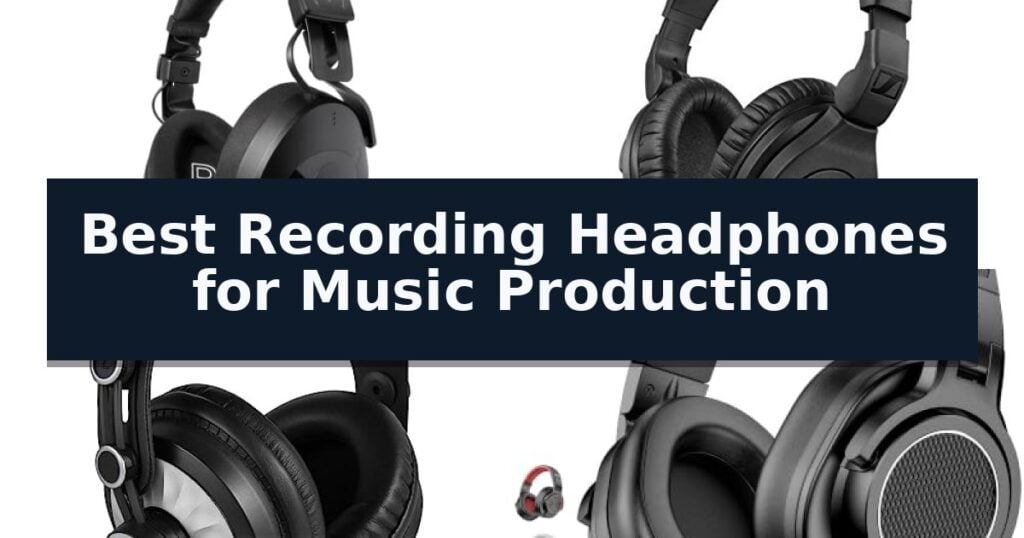
10 Best Recording Headphones for Music Production in 2026 Reviews
Quick Comparison
| Product | Best For | Key Strength | Score |
|---|---|---|---|
| Rode NTH-100 Studio Headphones | Best Overall | CoolTech gel earpads actively dissipate heat for comfort. | 4.9 |
| Sennheiser HD 280 Pro Studio Headphones | Superior Passive Noise Isolation | 32 dB passive noise attenuation for effective isolation | 4.9 |
| StreamEye Cans50 Studio Headphones | Full Spectrum Audio Accuracy | Closed-back design provides excellent sound isolation and prevents audio bleed. | 4.8 |
| New Bee Studio Headphones | Ultra-Lightweight for Extended Wear | 50mm professional drivers for high-fidelity audio reproduction. | 4.4 |
| OneOdio Pro-30 Studio Headphones | Dynamic Bass for Mixing | 50mm drivers with neodymium magnets for dynamic sound reproduction. | 4.9 |
| OneOdio A71 Studio Headphones | Hi-Res Clarity for Monitoring | High-resolution audio reproduction via 40mm drivers. | 4.9 |
| OneOdio A71D Studio Headphones | Versatile Plug-and-Play Monitoring | 90° swiveling ear cups for flexible single-sided monitoring. | 4.4 |
| Tascam TH-02 Studio Headphones | Budget-Friendly Professional Monitoring | Closed-back dynamic design provides excellent isolation for recording. | 4.8 |
| Maono AU-A04H Studio Headphones | Accurate Bass for Vocal Tracking | 50mm large-aperture drivers provide deep, accurate bass reproduction. | 4.7 |
| Dejasound Studio Recording Microphone Kit | All-in-One Home Studio Solution | All-in-one kit includes isolation shield, pop filter, and tripod. | 4.9 |
How We Chose
To determine the best recording headphones for music production, we analyze the technical specifications and physical design of each model. We prioritize gear that offers a balanced sound profile for critical listening, alongside ergonomic features like swiveling earcups and breathable padding, which are essential for maintaining focus during extended studio sessions.
- Frequency response accuracy for neutral monitoring
- Passive noise isolation capability
- Long-term wear comfort and heat management
- Cable durability and connection versatility
- Build quality and structural longevity
1 Rode NTH-100 Studio Headphones — Advanced Cooling for Long Sessions
Precision in the studio requires gear that remains comfortable during extended sessions, a priority addressed by the RØDE NTH-100 Professional Over-ear Headphones. These headphones feature proprietary CoolTech gel integrated into the earpads, designed to absorb and dissipate heat to actively reduce ear fatigue during long mixing or recording tasks.
Beyond comfort, the RØDE NTH-100 utilizes custom-matched drivers engineered to provide an accurate frequency response. This acoustic design is optimized for clarity and detail, making them a reliable choice for critical audio tasks such as music production, editing, and podcasting.
The build quality emphasizes both durability and usability. The headband and earcups are finished with Alcantara cushions, a material chosen for its breathability and softness. For added convenience in a studio environment, the headphones include a removable cable with a locking connector and dual-sided attachment points, allowing users to route the cable according to their specific workstation setup.
RØDE supports the long-term utility of this hardware with a lifetime manufacturer warranty upon registration. This commitment to longevity underscores the professional intent of the design, ensuring the headphones remain a staple in a production environment.
Best for: Producers and engineers who require long-term comfort and accurate monitoring during extended studio sessions.
Skip if: Users who prefer an open-back design for a wider soundstage or those who require wireless connectivity for mobile use.
- CoolTech gel earpads actively dissipate heat for comfort.
- Custom-matched drivers provide high-accuracy frequency response.
- Alcantara cushions offer a breathable and durable fit.
- Locking, dual-sided cable allows for flexible workstation configuration.
- Wired-only design lacks wireless functionality for casual listening.
- Closed-back architecture may not provide the soundstage preferred by some mixing engineers.
2 Sennheiser HD 280 Pro Studio Headphones — Superior Passive Noise Isolation
Achieving precise monitoring in a studio environment requires equipment that effectively isolates the listener from external distractions. The Sennheiser HD 280 Pro Studio Headphones are engineered with a closed-back architecture capable of providing up to 32 dB of attenuation against ambient noise, making them a practical choice for recording sessions where bleed must be strictly controlled.
These headphones feature an ergonomic, lightweight design intended for extended use during long production sessions. The around-the-ear construction utilizes padded earcups to maintain comfort, while the collapsible earpieces allow for a more compact footprint when storing the gear between sessions or transporting it to different recording locations.
For technical reliability, the Sennheiser HD 280 Pro Studio Headphones offer an extended frequency response designed to deliver warm and natural sound reproduction. The unit includes a coiled cable that extends from 3.3 to 9.8 feet, providing sufficient reach for various studio configurations without excessive slack.
Maintenance is a key consideration for long-term studio equipment. This model is built with easily replaceable components, including the earpads, headband padding, and the audio cord, which helps extend the service life of the headphones without requiring a full replacement of the unit.
Best for: Studio engineers and musicians who require high levels of passive noise isolation and a durable, field-serviceable design for recording and monitoring.
Skip if: Users who prefer an open-back design for a wider soundstage or those who require a lightweight, straight cable for mobile listening on the go.
- 32 dB passive noise attenuation for effective isolation
- Field-replaceable parts including earpads and cable
- Collapsible design for efficient storage
- Coiled cable provides flexible reach
- Closed-back design may feel restrictive for some users
- Coiled cable adds weight compared to straight alternatives
3 StreamEye Cans50 Studio Headphones — Full Spectrum Audio Accuracy
Achieving precise audio monitoring in a studio environment requires equipment that can isolate sound effectively while maintaining a balanced frequency response. The StreamEye Cans50 Studio Headphones utilize a closed-back design to block external noise and prevent audio bleed, ensuring that your mix remains accurate whether you are tracking vocals in a shared space or performing critical editing tasks in a DAW.
These headphones are built around 50mm drivers that provide a wide 15Hz–25kHz frequency response, covering the full audio spectrum necessary for professional production. The construction prioritizes comfort during long sessions, featuring soft, breathable ear cushions and an adjustable headband. For added versatility, the earcups offer 90-degree rotation and fold flat, making them convenient for storage or transport between studio locations.
Connectivity is straightforward, as the headphones include a 3.5mm cable and a 1/4" adapter, allowing for direct integration with audio interfaces, mixing desks, guitar amps, and DJ controllers. With a 32 ohm impedance and 95 dB/mW sensitivity, they are designed to work across various professional audio setups without requiring specialized drivers. The package also includes a protective bag to keep the gear secure.
Engineered for audio engineers, producers, and performers, the StreamEye Cans50 Studio Headphones offer a reliable monitoring solution backed by a 1-year warranty. By combining physical sound isolation with a broad frequency range, they serve as a practical tool for those who need to maintain focus and accuracy throughout the recording and mixing process.
Best for: Home studio producers and audio engineers who require reliable sound isolation and a wide frequency response for tracking and mixing in shared environments.
Skip if: Users who prefer the open, natural soundstage of open-back headphones for long-term mixing sessions may find the closed-back isolation of this model too restrictive.
- Closed-back design provides excellent sound isolation and prevents audio bleed.
- 50mm drivers deliver a broad 15Hz–25kHz frequency response.
- 90-degree rotating earcups allow for easy storage and flexible monitoring.
- Includes a 1/4" adapter for broad compatibility with professional audio gear.
- Closed-back construction may feel less spacious than open-back alternatives for some listeners.
4 New Bee Studio Headphones — Ultra-Lightweight for Extended Wear
Precision monitoring requires gear that balances acoustic accuracy with long-term comfort, a challenge often met by the New Bee Studio Headphones. These headphones utilize massive 50mm professional drivers to deliver a frequency response characterized by dynamic bass, balanced mids, and clear treble, ensuring that producers can make informed mixing and mastering decisions.
Designed specifically for the demands of the studio, the New Bee Studio Headphones feature an ultra-lightweight 210g build. This construction, paired with skin-friendly protein leather and soft memory foam ear cushions, is engineered to mitigate fatigue during extended tracking or editing sessions. The over-ear design also provides passive noise reduction to help isolate the listener from ambient room distractions.
Versatility is integrated into the hardware through 90° swiveling ear cups, which facilitate quick single-ear monitoring for DJs or musicians tracking in a live environment. The headband is fully adjustable to maintain a stable, secure fit across different head shapes.
Connectivity is streamlined via a dual-connector design that includes both 3.5mm and 6.35mm gold-plated plugs. This allows for direct, signal-loss-free connections to a wide array of professional audio equipment, including audio interfaces, digital pianos, and guitar amplifiers, without requiring additional adapters.
Best for: Producers and musicians who require a lightweight, versatile monitoring solution for long studio sessions or live tracking.
Skip if: Users who prefer a wireless connection or require open-back headphones for a wider soundstage during critical mixing.
- 50mm professional drivers for high-fidelity audio reproduction.
- Ultra-lightweight 210g design reduces physical fatigue.
- Dual-connector versatility with integrated 3.5mm and 6.35mm plugs.
- Passive noise reduction via ergonomic over-ear cups.
- Wired-only operation limits mobility compared to wireless alternatives.
5 OneOdio Pro-30 Studio Headphones — Dynamic Bass for Mixing
Precision in the studio often hinges on the ability to monitor audio accurately without external interference. The OneOdio Pro-30 Studio Headphones utilize large 50mm neodymium drivers to provide a wide frequency response, specifically engineered to deliver the dynamic bass and clarity required for critical tasks like mixing, monitoring, and DJing.
Designed for long sessions, these headphones feature protein leather memory foam ear cushions that provide both comfort and effective noise isolation. The adjustable, stretchable headband allows users to find a secure fit, while the 90-degree swiveling ear cups facilitate convenient single-side monitoring, a necessity for producers who need to keep one ear on the room environment during recording.
Versatility is a core component of the design, highlighted by the inclusion of a detachable, DJ-style coiled cord that stretches up to 9.8 feet. This eliminates the need for extra adapters, as the unit comes with both 3.5mm and 6.35mm plugs, ensuring compatibility with a wide range of studio gear including mixers, keyboards, e-drums, and audio interfaces.
The OneOdio Pro-30 Studio Headphones are built to integrate into diverse production setups. Whether connected to a high-end amplifier or a standard laptop, the hardware is optimized to maintain signal integrity across various devices, making them a practical choice for those who require a reliable, wired monitoring solution without unnecessary complexity.
Best for: Music producers and DJs who require a reliable, wired monitoring solution with versatile connectivity options for various studio hardware.
Skip if: Users who require wireless connectivity or an ultra-lightweight design for mobile listening will find the wired, studio-centric build of these headphones less suitable.
- 50mm drivers with neodymium magnets for dynamic sound reproduction.
- Detachable dual-plug system (3.5mm and 6.35mm) eliminates the need for adapters.
- 90-degree swiveling ear cups for professional single-side monitoring.
- Protein leather memory foam padding for sustained comfort during long sessions.
- Wired-only connection limits mobility compared to Bluetooth-enabled alternatives.
- Larger form factor may be less portable than compact consumer headphones.
6 OneOdio A71 Studio Headphones — Hi-Res Clarity for Monitoring
Achieving precise audio monitoring requires equipment that balances clarity with practical studio utility. The OneOdio A71 Hi-Res Wired Over-Ear Studio Headphones are engineered with 40mm drivers designed to deliver high-resolution audio, ensuring that every nuance of a recording is captured with depth and precision during mixing or monitoring sessions.
These headphones prioritize long-term usability through a foldable design and an adjustable, stretchable headband that allows users to customize the fit for extended sessions. The inclusion of soft padded ear cushions provides necessary noise isolation, while the 90° swiveling earcups facilitate single-sided monitoring, allowing engineers to maintain awareness of their surroundings without removing the headset.
Connectivity is streamlined for professional environments through a versatile 6.6-9.8 ft coiled cord that eliminates the need for extra adapters. The device includes both 3.5mm and 6.35mm plugs, ensuring compatibility with a wide range of studio gear, including amplifiers, guitars, keyboards, and computers. Additionally, a shared audio port allows for daisy-chaining another pair of headphones, enabling collaborative listening without requiring external splitters.
By focusing on essential studio requirements like high-fidelity output and flexible physical monitoring, the OneOdio A71 Studio Headphones serve as a reliable tool for producers and DJs who need consistent performance across various recording applications.
Best for: Music producers and DJs who require versatile, wired monitoring with the ability to daisy-chain audio for collaborative sessions.
Skip if: Users who prioritize wireless freedom or active noise cancellation, as these headphones are strictly wired and rely on passive isolation.
- High-resolution audio reproduction via 40mm drivers.
- Dual-plug connectivity (3.5mm/6.35mm) eliminates the need for adapters.
- Shared audio port allows for easy multi-user monitoring.
- 90° swiveling earcups support convenient single-sided monitoring.
- Wired-only connection limits mobility compared to wireless alternatives.
- Passive noise isolation only; lacks active noise cancellation technology.
7 OneOdio A71D Studio Headphones — Versatile Plug-and-Play Monitoring
Achieving precise audio monitoring requires equipment that balances technical accuracy with physical versatility. The OneOdio A71D Wired Over-Ear Headphones are engineered to support a wide range of studio tasks, from critical mixing to casual listening, by utilizing 40mm drivers that produce a balanced sound profile featuring deep bass, clear mids, and crisp highs.
Designed for the demands of a production environment, these headphones feature 90° swiveling ear cups that facilitate efficient single-sided monitoring. This capability is essential for DJs and producers who need to keep one ear on the room while focusing on the mix, providing a practical workflow advantage during live sessions or recording.
Comfort and durability are integrated into the build through ultra-soft padded ear muffs and an adjustable headband, which help reduce fatigue during extended studio sessions. The foldable design adds a layer of convenience for transport, ensuring the unit remains protected when moving between home offices, rehearsal spaces, or professional studios.
Connectivity is streamlined via a 2.2m (7.2ft) audio cable that includes both 3.5mm and 6.35mm plugs. This universal compatibility allows the headphones to connect directly to a variety of hardware, including mixers, guitar amps, keyboards, and standard PCs, making them a versatile tool for any musician or content creator.
Best for: Producers, DJs, and musicians who require a versatile, wired monitoring solution compatible with both professional studio hardware and home recording setups.
Skip if: Users who prioritize wireless connectivity or active noise cancellation for travel will find the strictly wired design and passive isolation of this model insufficient.
- 90° swiveling ear cups for flexible single-sided monitoring.
- Universal compatibility with included 3.5mm and 6.35mm plugs.
- 40mm drivers tuned for studio-grade sound reproduction.
- Foldable, ergonomic design optimized for long-term comfort.
- Wired-only connection limits mobility compared to wireless alternatives.
- Passive isolation only, lacking electronic noise cancellation features.
8 Tascam TH-02 Studio Headphones — Budget-Friendly Professional Monitoring
Achieving accurate monitoring during tracking sessions requires reliable hardware that balances acoustic isolation with long-term comfort. The TASCAM TH-02 Professional Studio Monitor Headphones utilize a closed-back dynamic design to provide the necessary acoustic environment for recording, podcasting, and general music production tasks. This architecture is specifically useful for recording scenarios where preventing sound bleed into the microphone is essential, ensuring that producers can capture clean audio without external interference.
These headphones are built for extended use, featuring a tightly-stitched, padded headband and ear pads designed to reduce fatigue during long sessions. The construction focuses on delivering clean sound with a rich bass response and crisp highs, allowing producers to hear the nuances of their mix. This balance of frequency response is intended to provide a clear representation of the audio signal, which is a critical requirement for those refining their tracks in a studio setting.
Portability is a key aspect of the design, as the foldable construction allows for compact transport between studio locations or home setups. The unit maintains a lightweight profile of approximately 0.66 pounds, making it easy to carry without sacrificing build quality. The inclusion of a snap-on 1/8” (3.5 millimeter) to 1/4” (6.3 millimeter) adapter provides immediate compatibility with various professional audio interfaces and mixing consoles, eliminating the need for additional hardware purchases.
While the TASCAM TH-02 Professional Studio Monitor Headphones offer a robust solution for tracking, they rely on a wired-only connection. This design choice ensures a consistent, latency-free signal path, which is preferred for critical monitoring, though it does limit the physical mobility of the user compared to wireless alternatives. This trade-off prioritizes signal integrity and reliability over the convenience of a cable-free setup.
Best for: Producers and podcasters who need a reliable, foldable, closed-back monitoring solution for tracking and mixing.
Skip if: Users who require an open-back soundstage for critical mastering or those who prefer wireless connectivity.
- Closed-back dynamic design provides excellent isolation for recording.
- Foldable design allows for easy storage and transport.
- Includes a snap-on 1/4 inch adapter for versatile connectivity.
- Padded headband and ear pads support comfort during long sessions.
- Wired-only connection limits mobility compared to wireless alternatives.
9 Maono AU-A04H Studio Headphones — Accurate Bass for Vocal Tracking
Achieving professional-grade audio monitoring requires hardware that balances frequency accuracy with long-term comfort. The Maono AU-A04H Studio Headphones are built around 50mm large-aperture drivers, which are specifically engineered to deliver a deep, accurate bass response essential for critical listening during vocal tracking and music production.
These headphones feature an ergonomic circumaural design with soft earmuffs that contour around the ears to provide effective sound isolation, minimizing external interference during recording sessions. The headband is constructed from a PC + ABS composite, ensuring a lightweight build that maintains durability while reducing fatigue during extended studio use.
Designed for versatility in a production environment, the unit includes 90-degree swiveling earcups that facilitate convenient single-ear monitoring. The foldable, flexible construction allows for easy storage, while the included 9.8ft coil retractable cable provides significant range of motion for the user without cluttering the workspace.
Compatibility is a primary focus, as the headphones utilize a standard 3.5mm jack and include a 6.35mm adapter, allowing for seamless integration with mixers, phantom power supplies, and various mobile or desktop devices. This makes them a practical, multi-purpose tool for both monitoring and general playback tasks.
Best for: Producers and podcasters who require accurate low-end monitoring and a comfortable, foldable design for long recording sessions.
Skip if: Users who prefer an open-back headphone design for a wider soundstage or those who require wireless connectivity for their production workflow.
- 50mm large-aperture drivers provide deep, accurate bass reproduction.
- Foldable, ergonomic design with swiveling earcups for flexible monitoring.
- Wide compatibility via 3.5mm and 6.35mm connectivity options.
- Wired-only connection limits movement compared to wireless alternatives.
- Closed-back design may not provide the soundstage preferred by some mixing engineers.
10 Dejasound Studio Recording Microphone Kit — All-in-One Home Studio Solution
Achieving professional-grade audio capture at home requires a reliable signal chain, and the Dejasound Studio Recording Microphone Kit provides a comprehensive, all-in-one solution for creators. This kit centers on a high-fidelity condenser microphone that utilizes a 16mm diaphragm and a cardioid polar pattern to isolate vocals while minimizing unwanted background noise.
The system is designed for immediate integration into any digital workflow, featuring a USB plug-and-play interface that connects directly to PCs, laptops, or smartphones without needing external audio interfaces. With a 192kHz/24Bit sampling rate and a 30Hz-16kHz frequency response, the microphone captures clean, detailed audio suitable for music production, podcasting, and streaming.
Usability is enhanced through integrated hardware controls, including echo adjustment, volume toggles, and a dedicated mute button. Monitoring is simplified by the inclusion of a 3.5mm headphone jack, allowing for real-time audio feedback. The kit also prioritizes acoustic control with a five-door foldable isolation shield, which uses high-density panels to reduce room reflections during recording sessions.
Portability and setup are streamlined by the lightweight construction of the entire 4.1lb kit. The package includes a tripod stand, a 6-inch shockproof pop filter, and necessary connectivity adapters for Lightning and Type-C devices, ensuring that users have the essential tools to establish a functional home studio environment immediately.
Best for: Home studio creators and podcasters who require a complete, plug-and-play audio capture system with integrated noise-reduction hardware.
Skip if: Users who already possess professional-grade XLR microphones and dedicated audio interfaces will find the USB-only connectivity and included accessories redundant.
- All-in-one kit includes isolation shield, pop filter, and tripod.
- USB plug-and-play connectivity for simple setup.
- High-resolution 192kHz/24Bit sampling rate for detailed audio.
- Integrated hardware controls for volume, echo, and muting.
- USB-only output limits compatibility with professional XLR-based audio gear.
- Fixed polar pattern may not be suitable for multi-person recording scenarios.
Best Recording Headphones for Music Production Buying Guide
The Importance of Closed-Back Design
Closed-back headphones are essential for recording because they prevent sound from leaking out of the earcups and into your microphone. This isolation is critical when tracking vocals or acoustic instruments, as it ensures your backing tracks do not bleed into the final recording.
Beyond recording, this design provides a more intimate listening experience that helps you focus on subtle details in the mix. By blocking out ambient room noise, you can make more accurate decisions regarding compression, reverb tails, and EQ adjustments.
Frequency Response and Sonic Accuracy
A flat or neutral frequency response is the hallmark of a professional studio headphone. Unlike consumer headphones that often boost bass or treble for a more exciting sound, studio monitors aim to reproduce the audio exactly as it was recorded.
This transparency allows you to identify harsh frequencies or muddy low-end issues that might otherwise go unnoticed. When choosing your pair, look for models that emphasize clarity across the spectrum rather than artificial enhancement.
Ergonomics for Extended Sessions
Music production often involves hours of continuous wear, making comfort a non-negotiable factor. Look for headphones with memory foam padding and high-quality coverings like Alcantara or protein leather that distribute pressure evenly across the head.
Features like integrated cooling gels or lightweight frames can significantly reduce ear fatigue. If you frequently monitor for long periods, prioritize models that offer adjustable headbands and breathable materials to keep your ears cool.
Connectivity and Cable Management
Studio environments require versatile connectivity options to interface with various gear, from audio interfaces to digital pianos. Most professional headphones include both 3.5mm and 6.35mm adapters to ensure compatibility with standard studio equipment.
Consider the cable type, as coiled cables offer flexibility and prevent tangling, while straight cables are often preferred for mobile setups. Removable cables are a major advantage, as they allow you to replace a damaged cord without needing to buy an entirely new pair of headphones.
Durability and Maintenance
Professional equipment should be built to withstand the rigors of daily use in a studio. Look for models with robust hinges and replaceable parts, such as earpads and cables, which are the first components to show wear.
Investing in a pair with a solid warranty or a reputation for modularity can save you money in the long run. A durable build ensures that your investment remains a reliable part of your production workflow for years to come.
Frequently Asked Questions
Why are closed-back headphones preferred for recording?
Closed-back headphones provide the necessary isolation to prevent audio bleed from the headphones into the microphone, ensuring clean vocal and instrument takes.
Do I need an amplifier for studio headphones?
Most studio headphones are designed to work well with standard audio interfaces. However, check the impedance of your specific model, as high-impedance headphones may require a dedicated amplifier to reach optimal volume levels.
What is the benefit of swiveling earcups?
Swiveling earcups allow for single-ear monitoring, which is a common practice for DJs and producers who need to hear the room or communicate with others while keeping one ear on the mix.
Can I use studio headphones for casual listening?
Yes, you can, but keep in mind that studio headphones are tuned for accuracy rather than entertainment. They may sound less 'exciting' than consumer headphones because they do not artificially boost bass or treble.
How often should I replace my headphone earpads?
Earpads should be replaced when the material begins to crack, flake, or lose its cushioning. Replacing them periodically helps maintain both comfort and the acoustic seal necessary for accurate monitoring.
Conclusion: Our Top Pick
Our top pick is Rode NTH-100 Studio Headphones. Choosing the right recording headphones is a foundational step in building a professional-grade music production environment. By focusing on sonic accuracy, physical comfort, and effective noise isolation, you ensure that your monitoring setup supports your creative process rather than hindering it.
Whether you prioritize the advanced cooling features of the Rode NTH-100 or the robust isolation of the Sennheiser HD 280 Pro, selecting a model that aligns with your specific workflow will lead to better mixing decisions and higher-quality recordings.