Elgato Wave XLR MK.2 Audio Interface is our top choice for the Best XLR Audio Interface for Gaming because it provides a massive 80dB of gain and seamless integration with the Stream Deck for intuitive control.
When selecting an interface for gaming, the primary goal is to achieve clean, studio-quality audio without adding unnecessary complexity to your streaming workflow. Experienced streamers prioritize devices that offer low-latency monitoring and software-based routing, which allow for precise control over game audio, voice chat, and microphone levels without needing to alt-tab during a broadcast.
Beyond raw audio fidelity, the physical design of the interface plays a significant role in a gaming setup. Features like dedicated mute buttons, tactile volume faders, and visual level feedback are essential for making quick adjustments while staying focused on the game. These elements help maintain a professional broadcast standard while simplifying the technical demands of a live production.
Once you have selected your interface, pairing it with the Best XLR Microphones for Gaming will ensure you get the best possible sound for your audience. For those looking to expand their setup, our guide on the Best XLR Audio Interface for Streaming offers further insights into managing complex audio chains.
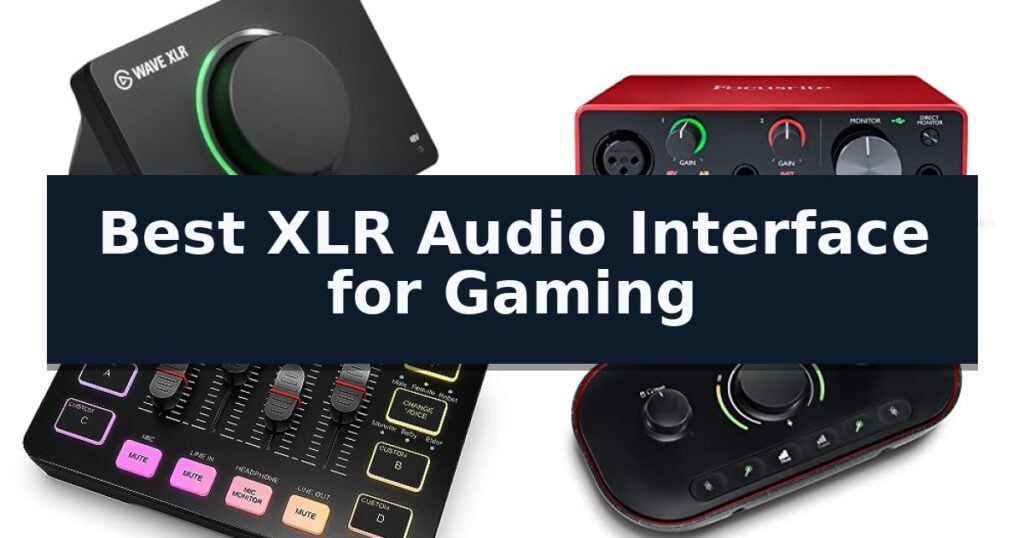
10 Best XLR Audio Interface for Gaming in 2026 Reviews
Quick Comparison
| Product | Best For | Key Strength | Score |
|---|---|---|---|
| Elgato Wave XLR MK.2 Audio Interface | Best Overall | Massive 80dB gain capable of driving demanding XLR microphones. | 4.9 |
| Focusrite Scarlett Solo 3rd Gen Interface | Industry Standard Preamp Quality | High-performance mic preamps with switchable Air mode for enhanced vocal clarity. | 4.5 |
| FIFINE Ampligame SC3 Gaming Audio Mixer | Budget-Friendly RGB Mixer | Individual channel faders for precise volume control | 4.7 |
| Focusrite Vocaster Two Interface | Dual-Host Podcast Recording | Auto Gain functionality for rapid level setting | 4.7 |
| M-AUDIO M-Track Duo Audio Interface | Dual Input Versatility | Transparent Crystal Preamps for high-quality microphone signal capture. | 4.7 |
| Mackie Onyx Artist 1X2 Interface | Durable Studio-Grade Build | Boutique-quality Onyx mic preamp for superior sound fidelity. | 4.3 |
| MAONO G1 Neo Gaming Audio Mixer | Compact Streamer-Focused Control | Integrated RGB lighting with 11 customizable color modes. | 4.4 |
| Synido Live 005 Audio Interface | Portable Multi-Mode Monitoring | Three-mode monitoring for flexible audio routing. | 4.4 |
| voijump A660 Gaming Audio Mixer | Tactile Fader Volume Control | Independent volume faders for precise, real-time audio balancing. | 4.8 |
| PUPGSIS T12 Gaming Audio Mixer | Multi-Person Streaming Hub | Independent volume faders for precise channel mixing | 4.9 |
How We Chose
Selecting the right audio interface for gaming requires balancing professional-grade sound quality with the specific, fast-paced needs of a streamer. We evaluate these devices based on their ability to manage complex audio routing, provide sufficient gain for various microphone types, and offer intuitive, hardware-based controls that keep your focus on the game rather than the software.
- Gain Headroom: Ability to drive demanding XLR microphones without requiring external pre-amplifiers.
- Software Routing: Integration with applications that allow for mixing game audio, music, and voice.
- Tactile Controls: Presence of physical buttons or faders for immediate mute and volume adjustments.
- Latency Performance: Capability for real-time monitoring to ensure zero-delay feedback.
- Build and Form Factor: Compact design suitable for crowded gaming desks and consistent visual feedback.
1 Elgato Wave XLR MK.2 Audio Interface — High-Gain Stream Deck Integration
Achieving professional-grade audio for gaming requires a reliable signal path, and the Elgato Wave XLR MK.2 Audio Interface provides a high-performance solution designed specifically for demanding XLR microphones. By delivering a massive 80dB of gain, this interface ensures that even gain-hungry dynamic microphones operate with clarity without requiring external preamps.
The device streamlines the gaming setup through its Wave Link app, which allows for precise routing of game audio, voice chat, and system sounds. Users can manage their entire audio mix directly from the interface, utilizing onboard voice effects like compression and EQ to polish their broadcast quality in real-time. The Wave FX Processor effectively unifies these DSP effects and VST plugins into a single, seamless signal chain.
Usability is prioritized through tactile hardware controls, including touch mute functionality and LED level feedback that provides instant visual status of input levels. The interface supports ultra-low-latency monitoring at 24bit, 48kHz resolution, ensuring that streamers hear exactly what their audience hears without distracting delays. Furthermore, its native integration with the Stream Deck ecosystem allows for hands-free control over audio levels and effects during intense gaming sessions.
With a compact footprint measuring approximately 4.6 inches in width, the unit fits easily into crowded desk setups. While it is a dedicated XLR interface, it offers robust amplification for headphones, ensuring that monitoring remains loud and clear across various headset impedances.
Best for: Gamers and streamers who require high-gain amplification for professional XLR microphones and deep integration with the Elgato software ecosystem.
Skip if: Users who need multi-channel inputs for recording multiple microphones simultaneously will find this single-input interface limiting.
- Massive 80dB gain capable of driving demanding XLR microphones.
- Native Stream Deck integration for advanced control.
- Comprehensive Wave Link app for routing and mixing.
- Integrated DSP effects including compressor and EQ.
- Single XLR input limits multi-mic recording.
- Requires Wave Link software for full feature access.
2 Focusrite Scarlett Solo 3rd Gen Interface — Industry Standard Preamp Quality
The Focusrite Scarlett Solo 3rd Gen Interface simplifies high-fidelity audio capture for gamers through its dedicated high-performance microphone preamp and switchable Air mode, which adds clarity to vocal signals. This compact unit is designed to integrate seamlessly into a desktop setup, providing a professional-grade bridge between XLR microphones and your computer.
Equipped with 24-bit/192kHz converters, the interface ensures that your voice retains its sonic quality during streams or recordings. The inclusion of Gain Halos around the input knobs provides a visual indicator to help prevent unwanted clipping or distortion, allowing for precise level management without constant software monitoring.
Beyond microphone support, the device features a high-headroom instrument input for direct connection of guitars or basses. The low-noise balanced outputs and dedicated headphone jack facilitate high-fidelity monitoring, ensuring that game audio and voice communication remain clear and free from background interference.
The package includes a comprehensive software suite, such as Pro Tools Intro and Ableton Live Lite, providing immediate tools for audio processing. With its robust build and a three-year warranty covering manufacturing faults, this interface offers a reliable foundation for users looking to upgrade their audio chain beyond standard onboard sound cards.
Best for: Gamers and streamers who require a reliable, high-fidelity XLR connection for a single microphone and instrument setup.
Skip if: Users who need to connect multiple XLR microphones simultaneously will find the single-input design of this interface insufficient.
- High-performance mic preamps with switchable Air mode for enhanced vocal clarity.
- Gain Halos provide intuitive visual feedback to prevent audio clipping.
- 24-bit/192kHz resolution ensures studio-quality audio conversion.
- Three-year warranty provides long-term support for hardware reliability.
- Single XLR input limits the device to one microphone at a time.
- No onboard DSP for hardware-level voice effects or processing.
3 FIFINE Ampligame SC3 Gaming Audio Mixer — Budget-Friendly RGB Mixer
The FIFINE Ampligame SC3 Gaming Audio Mixer simplifies the transition to professional-grade audio by integrating an XLR microphone input with 48V phantom power directly into a compact, desktop-friendly interface. Designed for streamers and content creators, this unit removes the complexity of traditional studio gear by offering a plug 'n play solution that works seamlessly with Windows and Mac OS environments.
Control is centralized through the device's individual channel faders, allowing for real-time volume adjustments of the microphone, line-in, headphone, and line-out channels without needing to navigate software menus. The inclusion of front-facing mute and monitor buttons ensures that users can manage their broadcast audio and hear their own voice feedback instantly, preventing unwanted background noise during live sessions.
Beyond basic mixing, the unit features four customizable sound effect buttons and a suite of audio processing tools, including 6 voice-changing modes and 12 auto-tune settings. These features allow for immediate post-production style modifications during live streams, providing a versatile toolkit for vocal enhancement.
The aesthetic design is highlighted by controllable vibrant RGB lighting, which offers both flowing and static color rotations to match various streaming themes. With its intuitive port layout—supporting headset, line-in, and line-out connections—the mixer provides a functional balance for managing audio across multiple devices or dual-PC streaming setups.
Best for: Beginner streamers and gamers looking to integrate an XLR microphone with physical volume controls and built-in sound effects.
Skip if: Users requiring multi-track recording capabilities or those who need more than one XLR microphone input for their setup.
- Individual channel faders for precise volume control
- Built-in 48V phantom power for condenser microphones
- Integrated voice-changing and auto-tune effects
- Vibrant RGB lighting with multiple modes
- Single XLR input limits multi-mic setups
- XLR cable not included in the package
4 Focusrite Vocaster Two Interface — Dual-Host Podcast Recording
Achieving professional-grade audio for streaming and content creation requires a reliable signal chain, and the Focusrite Vocaster Two is engineered specifically to streamline this process for dual-host setups. By integrating two microphone inputs and dedicated headphone outputs, it eliminates the need for complex routing software, allowing creators to manage their audio levels and monitoring directly from the hardware interface.
The device simplifies technical hurdles with its Auto Gain feature, which automatically sets input levels with the push of a button, ensuring consistent volume without manual adjustment. For those looking to refine their vocal profile, the Enhance function offers four podcaster-approved presets, while the dedicated Mute button provides an immediate way to silence the broadcast during unexpected interruptions.
Versatility extends to connectivity options, as the Focusrite Vocaster Two supports Bluetooth Phone Connectivity for integrating remote guests or playing audio directly from a mobile device. Additionally, the unit features a dedicated camera output, allowing users to send high-quality audio directly to a camera via a single TRS cable, which is particularly useful for vloggers aiming to improve their production value.
With over 70dB of gain available, the interface is capable of driving a wide range of microphones without the need for external boosters. While it excels in ease of use and integrated features for podcasters, users should note that its design is optimized for voice-centric workflows rather than complex multi-instrument studio recording.
Best for: Dual-host podcasters and streamers who require a simplified, hardware-controlled setup with integrated gain assistance and mobile connectivity.
Skip if: Users who require extensive multi-channel recording capabilities for complex musical arrangements or those who prefer software-based mixing over hardware controls.
- Auto Gain functionality for rapid level setting
- Dual microphone and headphone inputs for two-person setups
- Bluetooth and TRRS connectivity for easy phone integration
- Over 70dB of gain supports most microphones without boosters
- Voice-optimized design may lack features required for professional music production
5 M-AUDIO M-Track Duo Audio Interface — Dual Input Versatility
Achieving high-fidelity audio for streaming and recording requires a reliable connection between your microphone and computer. The M-AUDIO M-Track Duo USB Audio Interface simplifies this process by providing two versatile combo inputs that support XLR, line, and instrument signals, making it a practical choice for those who need to manage multiple audio sources simultaneously.
This interface is engineered with Crystal Preamps, which are designed to provide a transparent sound profile for your microphones, including sensitive condenser models. With 48kHz audio resolution, it ensures your recordings maintain clarity. The unit is compact and portable, measuring roughly 7.5 inches in width, which helps keep your desk space organized during intense gaming sessions or podcast recordings.
Monitoring your audio is straightforward thanks to the USB/Direct switch, which allows for zero-latency monitoring. This feature is essential for streamers who need to hear their own voice in real-time without distracting delays. The device also includes a 1/4-inch headphone output and stereo 1/4-inch outputs for flexible connection to your preferred monitoring gear.
The M-AUDIO M-Track Duo USB Audio Interface includes the MPC Beats Software suite, providing a foundation for production tasks. While it is a robust tool for capturing audio, users should note that its primary focus is on providing a clean, direct signal path rather than offering extensive onboard hardware effects or complex routing options.
Best for: Gamers and streamers who require a compact, reliable interface for dual-input setups like a microphone and a guitar.
Skip if: Users who require advanced features like built-in hardware DSP effects or more than two simultaneous input channels.
- Transparent Crystal Preamps for high-quality microphone signal capture.
- Zero-latency monitoring via the USB/Direct switch.
- Dual combo inputs supporting XLR, line, and instrument sources.
- Compact and portable design suitable for small desk setups.
- Limited to two inputs, which may not be sufficient for complex multi-person setups.
- Lacks onboard hardware effects, requiring software-based processing.
6 Mackie Onyx Artist 1X2 Interface — Durable Studio-Grade Build
Achieving professional-grade audio for streaming or voice recording requires a reliable signal chain, and the Mackie Onyx Artist 1X2 USB Audio Interface provides a robust foundation for your setup. This unit centers on a boutique-quality Onyx mic preamp, engineered to deliver high-fidelity sound with significant dynamic range, ensuring your microphone input remains clean and clear during intense gaming sessions or broadcasts.
Designed for versatility, the interface features a 2 in x 2 out 24-Bit/192kHz recording architecture, allowing for high-resolution audio capture. The inclusion of a dedicated ¼” TRS input with Hi-Z switch makes it straightforward to connect instruments like guitars or basses directly, while the 48v Phantom Power support ensures compatibility with studio-grade condenser microphones that require external power.
Usability is a core focus of the Mackie Onyx Artist 1X2 USB Audio Interface, which offers zero-latency direct monitoring of analog inputs. This allows you to hear your voice or game audio in real-time without distracting delays. The device is housed in a Built-Like-A-Tank design, prioritizing durability to withstand the rigors of daily use, and it operates via USB 2.0 bus-power, eliminating the need for an external power adapter.
For those expanding their software capabilities, the interface comes bundled with The Musician Collection, which includes 23 plugins and instruments. Whether you are managing a simple desktop microphone setup or integrating external instruments, this interface balances essential connectivity with a compact, portable form factor that fits easily into any gaming workstation.
Best for: Gamers and streamers who require a durable, bus-powered interface with high-fidelity preamps for professional-grade microphone input.
Skip if: Users who require multiple microphone inputs or advanced MIDI connectivity will find the single-preamp design of this interface too limiting for their needs.
- Boutique-quality Onyx mic preamp for superior sound fidelity.
- Zero-latency direct monitoring for real-time audio feedback.
- Bus-powered USB 2.0 connectivity simplifies desk cable management.
- Rugged Built-Like-A-Tank construction ensures long-term durability.
- Single microphone input limits the ability to record multiple vocalists simultaneously.
7 MAONO G1 Neo Gaming Audio Mixer — Compact Streamer-Focused Control
The MAONO G1 Neo Gaming Audio Mixer distinguishes itself with an integrated RGB lighting system that offers 11 color variations, including gradients and rainbow effects, designed to match the aesthetic of a dedicated gaming setup. This compact interface serves as a centralized hub for streamers, combining audio control with visual flair to enhance the immersive quality of live broadcasts.
Engineered for vocal clarity, the MAONO G1 Neo Gaming Audio Mixer features a pro-preamp and 48V phantom power to support XLR microphones. It includes a one-click noise reduction function to filter out background interference, ensuring that communication with teammates or viewers remains clear. The unit also provides Bluetooth accompaniment input for seamless audio mixing during live streams.
For creative control, the mixer includes a voice change feature that allows users to shift their vocal profile into various presets, such as male, female, baby, or robot. Users can further customize their audio environment using 4 custom soundpads, which are useful for triggering specific audio tags or effects on the fly. The interface also supports Loopback functionality, providing additional flexibility for managing audio routing during gameplay.
The device is designed with a compact footprint, measuring approximately 6.29 inches in length and 2 inches in width, making it suitable for crowded desk spaces. It features an intuitive, user-friendly layout that prioritizes quick access to essential functions like one-click mute, allowing streamers to maintain focus on their content without navigating complex software menus.
Best for: Novice streamers and gamers looking for an all-in-one XLR interface that combines essential audio processing with customizable RGB lighting and sound effects.
Skip if: Users requiring high-fidelity multi-track recording or professional-grade studio preamps for complex musical production will find this entry-level mixer too limited.
- Integrated RGB lighting with 11 customizable color modes.
- Pro-preamp and 48V phantom power for XLR microphone support.
- One-click noise reduction and mute functions for immediate audio control.
- Four custom soundpads and voice-changing effects for interactive streaming.
- Limited to entry-level streaming features, lacking advanced routing capabilities found in professional studio interfaces.
8 Synido Live 005 Audio Interface — Portable Multi-Mode Monitoring
Achieving clear, low-latency audio for streaming and recording requires a reliable signal chain, and the Synido Live 005 Audio Interface provides a compact solution for desktop setups. Weighing only 300g, this interface is designed for portability while maintaining essential connectivity for XLR and 6.35mm microphones.
The device features three distinct monitoring modes that allow users to toggle between Stereo, Mix, and USB settings. This functionality is particularly useful for managing audio during live broadcasts or post-production tasks. The unit supports 24-bit/48kHz sampling to ensure accurate audio capture, supported by an independent audio chip intended to minimize recording latency.
For professional microphone setups, the interface includes a 48V phantom power switch, enabling the use of sensitive dynamic microphones. The front panel is equipped with 3-color gain lights—green, orange, and red—which provide visual feedback on volume levels to help prevent signal distortion during operation.
The Synido Live 005 Audio Interface connects via USB-C and includes a 3.5mm to 6.35mm adapter, facilitating compatibility with various recording devices. To ensure optimal performance and DAW integration, the manufacturer recommends installing a third-party universal ASIO driver.
Best for: Content creators and gamers who need a compact, portable interface with switchable monitoring modes for streaming and recording.
Skip if: Users who require higher than 48kHz sample rates or those who prefer a bus-powered interface that does not rely on third-party driver downloads for basic functionality.
- Three-mode monitoring for flexible audio routing.
- Visual gain indicators to prevent signal clipping.
- Compact and lightweight design for easy transport.
- 48V phantom power support for professional microphones.
- Requires third-party ASIO driver for best performance.
- Limited to 24-bit/48kHz sampling rate.
9 voijump A660 Gaming Audio Mixer — Tactile Fader Volume Control
Achieving professional-grade audio control for streaming requires more than just a microphone; it demands a dedicated hardware interface to manage levels and effects in real-time. The voijump A660 Gaming Audio Mixer provides a dedicated XLR microphone input with built-in 48V phantom power, allowing users to integrate high-quality condenser microphones directly into their gaming or streaming setup without needing external preamps.
This mixer distinguishes itself through its individual channel control, featuring four separate sliders for Microphone, Line In, Headphone, and Line Out. By handling audio routing directly on the hardware, streamers can balance game audio, music, and voice levels on the fly. The inclusion of zero-latency monitoring ensures that creators can hear their own voice clearly, which is essential for maintaining consistent volume and tone during long broadcast sessions.
Beyond basic mixing, the unit is equipped with creative sound effects including 6 voice-changing modes and 12 auto-tune settings. Four customizable buttons allow for the assignment of specific audio clips, enabling quick access to reaction sounds or pre-produced drops. The interface also features controllable RGB lighting with 5 distinct modes, allowing the hardware to visually integrate with the aesthetic of a gaming desk.
Designed for versatility, the voijump A660 Gaming Audio Mixer offers wide compatibility with PCs, Macs, and consoles like the PS4 and PS5. It functions as a plug-and-play solution for popular platforms including OBS, Discord, and Twitch. While it provides robust control for XLR setups, users should note that it does not support USB microphones, ensuring a clean, dedicated signal path for professional-style XLR gear.
Best for: Streamers and gamers who want physical, tactile control over their XLR microphone and multi-source audio levels.
Skip if: Users who rely exclusively on USB microphones or require compatibility with Xbox or Nintendo Switch consoles.
- Independent volume faders for precise, real-time audio balancing.
- 48V phantom power support for professional condenser microphones.
- Zero-latency monitoring for natural, echo-free vocal feedback.
- Customizable sound effects and voice-changing modes for enhanced production value.
- No support for USB microphones, limiting input options to XLR and Line In.
- XLR cable not included, requiring a separate purchase of a shielded cable for optimal performance.
10 PUPGSIS T12 Gaming Audio Mixer — Multi-Person Streaming Hub
The PUPGSIS T12 Gaming Audio Mixer serves as a centralized hub for streamers, featuring a professional preamplifier and 48V phantom power to support high-quality XLR microphone integration. This interface is designed to streamline the audio workflow for creators who need to manage multiple inputs simultaneously without complex technical configurations.
Equipped with four smooth volume faders, the mixer provides granular, independent control over Mic 1, Mic 2, Aux/Bluetooth, and Line Out channels. The integrated zero-latency monitoring and one-touch mute function allow for precise audio management during live sessions, ensuring that background audio or teammate communication remains clear while preventing unwanted broadcast mishaps.
The device offers creative versatility through six voice-changing modes, three reverb presets, and four customizable soundpads for triggering effects on the fly. Its aesthetic is complemented by 10 dynamic RGB lighting modes, which can be adjusted to match various streaming themes or room setups.
Connectivity is handled via a flexible interface that supports up to three microphone inputs, making it suitable for multi-person recording or gaming sessions. The inclusion of Bluetooth 5.3 provides a wireless option for audio input, while the unit maintains compatibility across computers, phones, and tablets for broad application in various streaming environments.
Best for: Streamers and gamers who require a multi-input audio interface with integrated sound effects and independent channel volume control.
Skip if: Users who require advanced multi-track recording capabilities or high-end studio-grade preamps for professional music production.
- Independent volume faders for precise channel mixing
- Supports up to three microphone inputs simultaneously
- Integrated 48V phantom power for XLR microphones
- Includes customizable soundpads and voice-changing effects
- Limited to basic streaming features rather than professional studio-grade audio processing
Best XLR Audio Interface for Gaming Buying Guide
Understanding Gain and Microphone Compatibility
The most critical specification for any XLR interface is the available gain. Many professional dynamic microphones require significant clean gain to reach optimal volume levels, and an interface that lacks this power will force you to turn up the volume, often introducing unwanted background hiss.
When shopping, look for interfaces that offer at least 50dB to 70dB of gain. If you plan to use a high-end dynamic microphone, prioritize models that explicitly state high-gain capabilities to ensure your voice remains clear and punchy throughout your gaming sessions.
The Importance of Software-Based Audio Routing
Modern gaming interfaces often include proprietary software that acts as a virtual mixer. This allows you to create separate audio mixes for your stream, your headphones, and your recording software, which is vital for managing complex audio sources like game audio, Discord, and music.
This routing capability is often what separates a standard studio interface from one designed for creators. By handling this processing on the interface or through dedicated software, you reduce the load on your CPU and ensure that your audio balance remains consistent.
Tactile Controls for Live Streaming
During a live stream, you do not have time to navigate through menus to mute your mic or adjust your game volume. Interfaces with physical knobs, faders, or touch-sensitive buttons provide the immediate response needed to manage your audio on the fly.
Prioritize devices that place these controls on the front panel. Being able to see your audio levels via LED feedback at a glance also prevents your voice from clipping, ensuring your audience always hears you at the correct volume.
Monitoring and Latency Considerations
Zero-latency monitoring is a non-negotiable feature for gamers. This allows you to hear your own voice through your headphones exactly as it sounds, without the distracting delay that occurs when audio is processed through a computer.
Look for interfaces that offer a direct monitor switch or a mix knob. This allows you to blend your microphone signal with the computer audio, giving you full control over how much of your own voice you hear while you play.
Form Factor and Desk Space
Gaming setups are often crowded with keyboards, mice, and monitors. A compact, well-designed interface that does not take up excessive desk space is highly desirable for maintaining a clean and functional workspace.
Consider the placement of inputs and outputs as well. Rear-facing ports can help keep cables hidden and organized, while front-facing ports are more convenient if you frequently plug and unplug your headphones or microphones.
Frequently Asked Questions
Do I need a separate mixer if I have an audio interface?
Most modern gaming-focused audio interfaces include built-in software mixers that handle the same tasks as a physical mixer, such as routing and volume balancing, making a separate hardware mixer unnecessary for most users.
Will an XLR interface improve my microphone quality?
Yes, an XLR interface provides a much cleaner, more stable signal path than a standard USB connection, which helps reduce noise and allows you to utilize the full potential of professional-grade XLR microphones.
What is 48V phantom power and do I need it?
48V phantom power is a feature required by most condenser microphones to operate. If you are using a condenser mic, you must ensure your interface has this feature; dynamic microphones generally do not require it.
Can I use an XLR interface with a gaming console?
Compatibility varies by device. While many interfaces work with PCs and Macs via plug-and-play, you should verify if the specific interface is officially supported by your console, such as the PS5, before purchasing.
What is the difference between an interface and a sound card?
An audio interface is an external device designed for high-quality recording and monitoring, whereas a sound card is typically an internal component focused on playback. Interfaces offer superior pre-amps and control for microphone input.
Conclusion: Our Top Pick
Our top pick is Elgato Wave XLR MK.2 Audio Interface. Choosing the right XLR audio interface transforms your gaming setup by providing the clean, professional audio quality that viewers expect. By focusing on gain headroom, intuitive physical controls, and robust software routing, you can ensure your voice remains clear and your audio levels are always balanced.
Whether you are a solo streamer or managing a multi-person setup, the options listed provide the necessary tools to elevate your production. Select the model that best aligns with your specific desk space and the number of inputs you require to complete your ideal streaming environment.