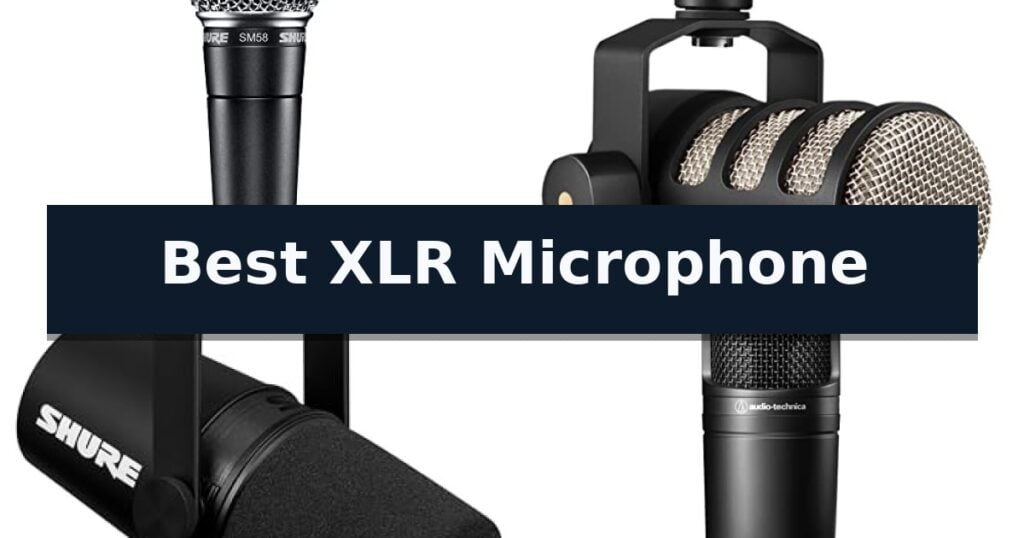
Shure SM58 Dynamic Vocal Microphone is our choice for the Best XLR Microphone because its legendary durability and tuned frequency response provide reliable, articulate vocal capture in any environment. The Rode PodMic is our recommendation for those needing a broadcast-focused dynamic mic for untreated rooms, while the Audio-Technica AT2020 serves as the go-to condenser for home studio recording.
Selecting a professional microphone requires balancing your recording environment with the desired sonic character. Dynamic microphones excel at rejecting background noise in less-than-ideal spaces, whereas condenser microphones offer the sensitivity and detail required for precise studio tracking. Understanding your specific application—whether for live performance or controlled vocal recording—is essential for making an informed investment.
Beyond the capsule type, consider the necessary peripheral equipment. XLR microphones require an external audio interface or mixer to provide gain and, in the case of condenser models, 48V phantom power. Evaluating your existing signal chain ensures compatibility and helps you achieve the professional audio fidelity expected from these broadcast and studio-grade tools.
For those exploring the broader market, our guide on Best XLR Dynamic Microphones provides additional context on how different capsules handle various vocal styles. If you require higher sensitivity for studio work, we also cover the Best XLR Condenser Microphone to help you understand the nuances of large-diaphragm recording.
10 Best XLR Microphone in 2026 Reviews
Quick Comparison
| Product | Best For | Key Strength | Score |
|---|---|---|---|
| Shure SM58 Dynamic Vocal Microphone | Best Overall | Finely tuned frequency response for warm, articulate vocal clarity. | 4.9 |
| Rode PodMic Dynamic Broadcast Microphone | Broadcast Quality for Untreated Rooms | Broadcast-quality dynamic capsule tuned specifically for speech. | 4.6 |
| Shure MV7X Dynamic Podcast Microphone | Focused Voice Isolation Technology | Focused voice isolation technology reduces ambient room noise. | 4.3 |
| Audio-Technica AT2020 Condenser Microphone | Studio Standard for Home Recording | High SPL handling for versatile recording applications. | 4.8 |
| Rode NT1 Signature Condenser Microphone | Ultra Low Self-Noise Performance | Ultra-low 4.5dBA self-noise for pristine recordings | 4.9 |
| FIFINE AmpliGame AM8 Dynamic Microphone | Versatile Hybrid Connection Choice | Hybrid USB/XLR connectivity for future-proof audio setups. | 4.3 |
| Sennheiser XS 1 Dynamic Microphone | Reliable Entry-Level Vocal Capture | Silent mute switch for convenient, noise-free control | 4.3 |
| MAONO PM320S Condenser Microphone | Complete Studio Starter Kit | Large 16mm condenser capsule for high-fidelity audio capture. | 4.9 |
| Pyle PDMIC58 Dynamic Microphone | Budget-Friendly Stage Essential | Passive design eliminates the need for batteries or external power. | 4.6 |
| FIFINE AmpliGame AM8T Dynamic Microphone | All-in-One Streaming Setup | Dual USB/XLR connectivity for flexible recording setups. | 4.3 |
How We Chose
Evaluating the best XLR microphone requires a deep look at how different capsules interact with your unique recording space. We prioritize technical specifications like polar patterns and frequency response to determine which models offer the most reliable performance for vocalists, podcasters, and studio engineers, ensuring each selection meets professional standards for clarity and noise rejection.
- Polar Pattern Accuracy
- Frequency Response Consistency
- Self-Noise and Sensitivity
- Build Quality and Mounting Versatility
- Connectivity and Power Requirements
1 Shure SM58 Dynamic Vocal Microphone — Industry Standard for Live Vocals
Achieving professional-grade audio capture requires a tool that balances sensitivity with structural integrity. The Shure SM58 Pro XLR Dynamic Vocal Microphone is defined by its finely tuned frequency response, which incorporates a subtle midrange lift to produce warm, articulate vocal reproduction that maintains clarity within a dense mix.
Engineered for versatility, this microphone utilizes a precision cardioid pickup pattern. This design focuses capture tightly on the sound source while actively minimizing background noise and feedback, making it a reliable choice for live performances, studio recording, and podcasting environments.
The physical construction reflects a focus on longevity and functional design. It features a rugged metal construction and a reinforced stand adapter, ensuring it can withstand the rigors of professional touring. Furthermore, an integrated pop protection system, consisting of a refined spherical grille and a built-in filter, effectively reduces plosives and wind noise without requiring external accessories.
As an industry-standard component, the Shure SM58 Pro XLR Dynamic Vocal Microphone provides consistent performance across various broadcast and recording applications. Its combination of internal acoustic tuning and durable exterior housing makes it a practical solution for users seeking a dependable, high-quality audio input device.
Best for: Vocalists and podcasters who require a durable, industry-standard microphone that effectively isolates voice from background noise.
Skip if: Users who require a condenser microphone for high-sensitivity studio recording of delicate acoustic instruments or ambient sounds.
- Finely tuned frequency response for warm, articulate vocal clarity.
- Precision cardioid pickup pattern minimizes unwanted background noise.
- Integrated pop protection reduces plosives and breath noise.
- Rugged metal construction designed for professional durability.
- Dynamic design may require more gain than condenser alternatives.
2 Rode PodMic Dynamic Broadcast Microphone — Broadcast Quality for Untreated Rooms
Achieving clear, professional-grade audio in a home studio often requires moving away from USB connections toward a more robust signal chain. The RØDE PodMic Cardioid Dynamic Broadcast Microphone is engineered specifically for this transition, utilizing a broadcast-quality dynamic capsule that is precision-tuned to capture speech while effectively rejecting ambient room noise.
This microphone features an all-metal build designed for long-term reliability in a static broadcast setup. Its internal architecture includes an integrated pop filter and shock mounting, which work together to mitigate plosives and vibrations from desk surfaces without the need for additional external accessories. This streamlined design helps maintain a clean workspace while ensuring consistent audio capture.
Because it is a professional-grade XLR device, the RØDE PodMic Cardioid Dynamic Broadcast Microphone requires an external audio interface or mixer to function. This requirement allows users to pair the microphone with high-quality preamps and processing gear, such as the RØDECaster series, to further refine the broadcast sound. The integrated swing mount simplifies the process of attaching the unit to standard broadcast arms.
The RØDE PodMic Cardioid Dynamic Broadcast Microphone is a specialized tool for creators who prioritize audio isolation and build quality. By focusing on a dynamic capsule design, it provides a practical solution for recording in untreated environments where background noise might otherwise interfere with clear vocal reproduction.
Best for: Content creators and podcasters working in untreated rooms who require a dedicated XLR microphone with built-in noise rejection.
Skip if: Users who prefer a plug-and-play USB connection or those who do not own an external audio interface or mixer.
- Broadcast-quality dynamic capsule tuned specifically for speech.
- Internal pop filter and shock mounting reduce the need for extra gear.
- Robust all-metal construction ensures long-term durability.
- Integrated swing mount for easy integration with broadcast arms.
- Requires an external XLR interface or mixer to operate.
- No USB connectivity available for direct computer use.
3 Shure MV7X Dynamic Podcast Microphone — Focused Voice Isolation Technology
Achieving professional-grade vocal clarity in a home studio often comes down to the hardware used to capture the signal. The Shure MV7X XLR Dynamic Podcast & Recording Microphone is built specifically for those who need a reliable, broadcast-inspired solution that minimizes room noise without requiring complex software setups.
At the heart of the Shure MV7X XLR Dynamic Podcast & Recording Microphone is its focused voice isolation technology. This dynamic cardioid design, paired with an integrated shock mount, actively works to suppress background distractions and mechanical vibrations. It is an ideal choice for creators who record in spaces that are not acoustically treated, as it prioritizes the sound source directly in front of the capsule.
Designed for durability, the microphone features a rugged all-metal construction that feels substantial and stable on a desk. It includes an adjustable yoke mount and a 3/8" adapter, ensuring compatibility with a wide range of standard microphone stands and boom arms. This broadcast-inspired form factor is optimized for spoken word, streaming, and vocal performance, providing a clean, professional aesthetic.
Because this is an XLR-only output microphone, it connects directly to professional audio interfaces and mixers. This design choice allows for granular signal control, making it a straightforward, hardware-focused tool for studio recording and broadcasting setups. By removing internal digital processing, it offers a consistent, reliable signal path for any creator looking to build a dedicated audio chain.
Best for: Creators and podcasters who want a dedicated, broadcast-quality XLR microphone that excels at isolating vocals in untreated rooms.
Skip if: Users who require a USB connection for plug-and-play functionality or those who do not already own an external audio interface or mixer.
- Focused voice isolation technology reduces ambient room noise.
- Rugged all-metal construction ensures long-term durability.
- Integrated shock mount minimizes unwanted vibrations.
- Professional XLR output allows for precise signal control via external hardware.
- XLR-only connectivity requires an external audio interface or mixer.
- No USB output for direct computer recording.
4 Audio-Technica AT2020 Condenser Microphone — Studio Standard for Home Recording
Achieving professional-grade audio capture in a home studio environment requires a microphone capable of handling diverse sound sources without coloration. The Audio-Technica AT2020 Cardioid Condenser Studio XLR Microphone is engineered to serve as a reliable foundation for project studios, utilizing a custom engineered low mass diaphragm that delivers an extended frequency response and superior transient response.
This microphone is built for versatility, featuring high SPL handling and a wide dynamic range that allows it to capture both quiet vocals and louder instruments with clarity. Its cardioid polar pattern is specifically designed to minimize the pickup of unwanted noise from the sides and rear, which significantly improves the isolation of your primary sound source during recording sessions.
Designed for seamless integration into professional signal chains, the unit utilizes an integral 3-pin XLRM output connector. The package includes essential accessories to get started immediately, such as a stand mount for 5/8"-27 threaded stands, a threaded adapter for 3/8"-16 compatibility, and a soft protective pouch for secure storage.
While this microphone provides a high standard of performance for home recording, users should ensure they have an audio interface or mixer capable of providing the necessary phantom power required for condenser microphone operation. Its robust construction and focused pickup pattern make it a practical tool for those prioritizing isolation and detailed sound reproduction.
Best for: Home and project studio recording applications requiring high-quality vocal and instrument isolation.
Skip if: You do not have an audio interface or mixer capable of providing 48V phantom power.
- High SPL handling for versatile recording applications.
- Cardioid polar pattern ensures excellent sound source isolation.
- Custom engineered low mass diaphragm for superior transient response.
- Includes essential mounting hardware and a protective pouch.
- Requires phantom power via an XLR interface or mixer.
- No onboard controls for gain or pattern switching.
5 Rode NT1 Signature Condenser Microphone — Ultra Low Self-Noise Performance
Achieving a professional-grade vocal recording requires a signal chain that minimizes interference, and the RØDE NT1 Signature Series Studio Condenser Microphone is engineered specifically for this level of clarity. By utilizing a large-diaphragm condenser capsule, this microphone captures the nuanced detail of vocal performances while maintaining a tight cardioid pattern that effectively isolates the source and rejects off-axis room noise.
The standout feature of this model is its whisper-quiet performance, boasting an incredibly low self-noise of just 4.5dBA. This technical achievement ensures that the microphone remains transparent, allowing the natural character of the voice to remain the focal point of the recording without the distraction of electronic hiss. It is designed to handle the demands of both studio vocal tracking and high-fidelity streaming environments.
Included in the box is a complete vocal setup, which provides the essential tools for immediate integration into an existing studio workflow. The package features an SM6 shock mount to decouple the microphone from mechanical vibrations and an integrated pop filter to manage plosives. Users simply need to connect the provided XLR cable to an audio interface to begin recording.
Built for longevity, the microphone is backed by a 10-year warranty upon registration, reflecting its robust construction. While it requires an external audio interface with phantom power to operate, its straightforward design makes it a reliable workhorse for those prioritizing clean, studio-quality audio capture.
Best for: Vocalists and streamers who require a low-noise, studio-grade microphone with an included shock mount and pop filter.
Skip if: Users who do not own an audio interface with phantom power or those who require a USB-based plug-and-play microphone solution.
- Ultra-low 4.5dBA self-noise for pristine recordings
- Complete vocal bundle including SM6 shock mount and pop filter
- Legendary large-diaphragm voicing optimized for vocals
- 10-year warranty for long-term reliability
- Requires an external audio interface with phantom power
- XLR-only connectivity limits direct computer use
6 FIFINE AmpliGame AM8 Dynamic Microphone — Versatile Hybrid Connection Choice
The FIFINE AmpliGame AM8 Dynamic Microphone offers a flexible hybrid design that bridges the gap between simple plug-and-play setups and professional-grade audio interfaces. By providing both USB and XLR connectivity, it allows creators to start with a straightforward digital connection and upgrade to a dedicated mixer or interface later without needing to replace their primary hardware.
Engineered with a cardioid polar pattern, this microphone is designed to focus on the sound source directly in front of it while rejecting off-axis ambient noise. This directional capability, combined with a frequency response of 50Hz-16KHz, helps maintain vocal clarity and intelligibility during streaming or podcasting sessions. A built-in noise-canceling windscreen further assists in reducing hum from nearby electrical appliances.
Usability is a core focus of the USB mode, which features a tap-to-mute button with an LED indicator to prevent accidental live-stream mishaps. When connected via USB, users gain access to additional hardware controls, including a headphone jack for real-time monitoring, a volume knob, and a mic gain knob that provides tactile resistance for precise adjustments. The integrated RGB lighting features three modes and ten colors, allowing for visual synchronization with other gaming gear.
The unit is built for versatility, featuring 3/8'' and 5/8'' metal threads that ensure compatibility with most standard microphone stands without requiring extra adapters. While the RGB and function keys are exclusive to the USB connection, the XLR path offers a clean, interference-free signal for those prioritizing audio fidelity through external hardware. This dual-purpose approach makes it a practical choice for users who transition between casual gaming and more serious vocal recording.
Best for: Creators who want a single microphone that can function as a simple USB device today and an XLR-connected professional tool tomorrow.
Skip if: Users who require RGB lighting and hardware-based mute or gain controls while using an XLR interface, as these features are only active in USB mode.
- Hybrid USB/XLR connectivity for future-proof audio setups.
- Cardioid dynamic capsule effectively rejects unwanted background noise.
- Integrated hardware controls including gain, volume, and tap-to-mute.
- Universal mounting threads compatible with most industry-standard mic stands.
- Limited functionality when using the XLR connection, as RGB and onboard controls are disabled.
- XLR cable not included in the package, requiring a separate purchase for analog operation.
7 Sennheiser XS 1 Dynamic Microphone — Reliable Entry-Level Vocal Capture
Achieving clear, reliable vocal capture requires a tool that balances sensitivity with noise rejection, a core requirement for any Best XLR Microphone setup. The Sennheiser XS 1 Handheld Dynamic Microphone addresses this by utilizing a cardioid polar pattern, which prioritizes sound directly in front of the capsule while effectively minimizing off-axis background noise. This directional focus is particularly beneficial in live environments or untreated spaces where ambient interference can compromise audio quality.
Designed for practical, everyday use, the Sennheiser XS 1 Handheld Dynamic Microphone features a silent mute switch. This integration allows users to instantly cut the signal without introducing the audible 'pop' or mechanical click often associated with standard switches, ensuring seamless transitions during presentations or performances. The unit is constructed with a durable housing and weighs 0.98 pounds, providing a substantial, balanced feel that remains comfortable during extended handheld operation.
Out of the box, the microphone includes a carry pouch and a mic clip, simplifying transport and setup on standard microphone stands. These accessories ensure that the device is ready for immediate deployment in various professional or personal audio applications. The inclusion of a 2-year warranty underscores the manufacturer's commitment to long-term reliability for standard vocal reinforcement tasks.
As a dedicated dynamic microphone, the Sennheiser XS 1 Handheld Dynamic Microphone is optimized for vocal clarity and ease of use. It is important to note that this unit requires an XLR connection; users must ensure their audio interface, mixer, or PA system provides the necessary XLR input to integrate the microphone into their existing sound chain. This hardware-dependent connectivity is a standard trade-off for the robust, battery-free performance characteristic of professional dynamic capsules.
Best for: Users needing a reliable, entry-level handheld dynamic microphone for vocal reinforcement with integrated mute functionality.
Skip if: Users requiring a condenser microphone for high-sensitivity studio recording or those who do not have an XLR-compatible audio interface.
- Silent mute switch for convenient, noise-free control
- Cardioid polar pattern for focused sound pickup
- Includes carry pouch and mic clip for immediate use
- Backed by a 2-year warranty
- XLR-only connectivity requires an external audio interface or mixer
- Dynamic capsule design may lack the high-frequency sensitivity of condenser alternatives
8 MAONO PM320S Condenser Microphone — Complete Studio Starter Kit
Achieving professional-grade audio capture for streaming and recording requires a reliable signal chain, and the MAONO PM320S Condenser Microphone serves as a comprehensive entry point for creators. This kit centers on a large 16mm condenser capsule designed to capture extended frequency response and superior transient detail, ensuring your vocal tracking or music production maintains high clarity.
The microphone utilizes a cardioid polar pattern to effectively reject off-axis ambient noise, which is particularly beneficial for recording in untreated home environments. To maintain signal integrity, the unit requires a 48V phantom power supply, connecting seamlessly to standard audio interfaces or mixers via the included XLR cable. This professional connection method ensures consistent performance for demanding vocal work.
Durability and convenience are integrated into the design through the rugged all-metal housing, which is built to withstand the rigors of daily studio use. The kit includes a versatile adjustable metal boom arm for stable positioning, along with a shock mount, pop filter, and foam windscreen to mitigate vibrations and plosives. These components work together to provide a clean, polished sound profile for podcasts, voice-overs, and singing.
By bundling essential hardware into a single package, this system offers a practical solution for those building a studio from scratch. Whether you are a musician or a content creator, the MAONO PM320S Condenser Microphone provides the necessary tools to achieve broadcast-quality audio without requiring separate component sourcing.
Best for: Content creators and vocalists seeking an all-in-one XLR studio starter kit for podcasting, streaming, and music production.
Skip if: Users who do not own an audio interface or mixer capable of providing 48V phantom power should choose a USB-based microphone instead.
- Large 16mm condenser capsule for high-fidelity audio capture.
- All-in-one studio kit includes boom arm, shock mount, and pop filter.
- Rugged all-metal housing ensures long-term durability.
- Cardioid polar pattern minimizes background noise interference.
- Requires 48V phantom power from an external audio interface or mixer.
- XLR-only connectivity lacks the plug-and-play convenience of USB microphones.
9 Pyle PDMIC58 Dynamic Microphone — Budget-Friendly Stage Essential
Reliable audio capture in demanding environments often requires a robust, passive solution that avoids the complexity of external power. The Pyle PDMIC58 Dynamic Microphone utilizes a dynamic mic element with a unidirectional cardioid pickup pattern, specifically engineered to isolate primary sound sources while minimizing background noise and feedback.
Designed for both stage and studio applications, this microphone features a rugged all-metal construction with a zinc die-cast case and a steel mesh windscreen. This build quality is intended to provide long-lasting performance during frequent use. The inclusion of a built-in acoustic pop filter further assists in reducing breath and plosive noises, contributing to clearer vocal reproduction.
The Pyle PDMIC58 Dynamic Microphone operates as a passive device, meaning it requires no batteries or phantom power to function. Users can simply connect the included 15ft XLR cable to begin recording or performing immediately. With a frequency response of 50Hz-15KHz and a 600 Ohm impedance, it is tuned to provide high signal output and punch, making it suitable for capturing amplified instruments as well as vocals.
Measuring approximately 1.96 inches in diameter and 6.41 inches in length, this unit is compact enough for various mounting configurations. Its unidirectional design ensures that sound is primarily captured from the front, which is a practical choice for live settings where stage bleed is a concern. The device is straightforward to integrate into existing audio setups without the need for complex signal chains.
Best for: Performers and content creators who need a durable, plug-and-play dynamic microphone for live vocals or instrument recording.
Skip if: Users who require a condenser microphone for high-sensitivity studio recording or those who need a built-in on/off switch for manual control.
- Passive design eliminates the need for batteries or external power.
- Rugged all-metal construction enhances durability for frequent transport.
- Cardioid pickup pattern effectively isolates vocals from background noise.
- Includes 15ft XLR cable for immediate out-of-the-box connectivity.
- No on/off switch requires users to disconnect the cable or mute via the mixer.
- Fixed dynamic element may lack the extreme sensitivity required for subtle acoustic recording.
10 FIFINE AmpliGame AM8T Dynamic Microphone — All-in-One Streaming Setup
The FIFINE AmpliGame AM8T Dynamic Microphone offers a dual-interface design that bridges the gap between simple plug-and-play setups and professional audio workflows. By providing both USB and XLR connectivity, this microphone allows users to transition from a straightforward computer connection to a more complex mixer or audio interface setup without needing to replace their primary recording hardware.
Engineered for clarity, the microphone utilizes a cardioid polar pattern to focus on the sound source directly in front of it while minimizing ambient room noise. With a sensitivity rating of -50dB, it is tuned to capture vocal nuances effectively for streaming, podcasting, or voice-over work. The inclusion of an external windscreen serves as a physical barrier to mitigate plosive sounds during recording.
Usability is enhanced through integrated hardware controls, including a dedicated mute button and a gain knob for real-time adjustments. Users can monitor their audio directly via the built-in headphones jack, which also features independent volume control. For those focused on visual aesthetics, the unit includes customizable RGB lighting that can be toggled or adjusted via a simple button press, removing the need for additional software configuration.
The kit is designed for immediate deployment, featuring a sturdy metal boom arm with elastic springs that clamps to desktops up to 2 inches thick. The arm includes an anti-scratch pad to protect surfaces while providing flexible positioning for the microphone. This comprehensive package includes the necessary USB to USB-C cable for immediate digital operation, though users planning to utilize the XLR interface will need to provide their own cable.
Best for: Streamers and podcasters who want a versatile microphone that can start as a simple USB device and later integrate into an XLR-based professional audio setup.
Skip if: Users who require an XLR cable included in the box or those who prefer a compact, desk-stand-only microphone rather than a boom arm mount.
- Dual USB/XLR connectivity for flexible recording setups.
- Integrated mute button and gain control for quick audio adjustments.
- Includes a sturdy metal boom arm with a secure desk clamp.
- Customizable RGB lighting with simple on-device controls.
- XLR cable not included in the package.
- Requires a desk thickness of less than 2 inches for the clamp.
Best XLR Microphone Buying Guide
Dynamic vs. Condenser Capsules
Dynamic microphones are built for robustness, making them ideal for live stages and untreated rooms where background noise is a concern. Their lower sensitivity means they focus primarily on the sound source directly in front of them, effectively ignoring distant ambient reflections.
Condenser microphones utilize a lightweight diaphragm that captures high-frequency detail and transient response with greater accuracy. These are the standard for controlled studio environments where capturing the nuance of a voice or acoustic instrument is the primary objective.
Understanding Polar Patterns
The cardioid polar pattern is the most common choice for vocal recording because it is highly directional. It captures sound from the front while significantly reducing pickup from the sides and rear, which helps isolate the speaker from room noise.
Some specialized microphones offer variations like supercardioid patterns, which provide even tighter isolation but require more precise microphone placement. Choosing the right pattern depends on how much of the surrounding room you want to include in your recording.
The Importance of Signal Chain
Unlike USB microphones, XLR models do not have built-in preamps or converters. You must pair them with an audio interface or mixer that provides clean gain to boost the signal to a usable level without introducing unwanted hiss.
If you choose a condenser microphone, ensure your interface can provide 48V phantom power. This electrical current is necessary to energize the internal circuitry of the microphone, without which the device will not produce a signal.
Build Quality and Mounting
Professional XLR microphones are typically constructed from metal to withstand the rigors of frequent handling or permanent installation. Look for models with reinforced yokes or shock mounts that prevent mechanical vibrations from traveling through the stand into your recording.
Consider the mounting hardware included with your purchase. Some microphones come with integrated swing mounts or stand adapters, while others may require you to purchase a separate shock mount to achieve the best isolation from desk bumps and vibrations.
Frequency Response and Vocal Character
Every microphone has a unique frequency response curve that dictates how it colors the sound. Some models feature a midrange lift designed to add warmth and presence to vocals, helping them cut through a mix without heavy post-processing.
Flat frequency response is preferred for neutral, accurate reproduction, often sought after for recording acoustic instruments or voice-overs. Reviewing the manufacturer's frequency chart can help you determine if a microphone's natural sound profile aligns with your voice or instrument.
Frequently Asked Questions
Do I need an audio interface for these microphones?
Yes, all XLR microphones require an audio interface or mixer to convert the analog signal into a format your computer can record and to provide the necessary gain.
What is the difference between an XLR and USB microphone?
XLR microphones provide a professional, modular signal path that allows you to upgrade your interface and preamp separately. USB microphones have built-in electronics for direct computer connection but offer less flexibility for future upgrades.
Do I need phantom power for all XLR microphones?
No, only condenser microphones typically require 48V phantom power. Dynamic microphones are passive and do not require external power to operate.
How do I reduce background noise in my recordings?
Using a dynamic microphone with a tight cardioid pattern is the most effective way to reject room noise. Additionally, ensure your microphone is positioned as close to your mouth as possible to maximize the signal-to-noise ratio.
Can I use these microphones for live performance?
Yes, dynamic microphones like the Shure SM58 are specifically designed for live stage use due to their durability and excellent feedback rejection.
Conclusion: Our Top Pick
Our top pick is Shure SM58 Dynamic Vocal Microphone. Choosing the right XLR microphone depends on your specific recording environment and the type of audio you intend to capture. Dynamic models offer the best balance of noise rejection and durability for podcasters and live performers, while condenser microphones provide the clarity needed for professional studio vocal work.
By investing in a quality interface to pair with your chosen microphone, you establish a foundation for professional-grade audio. Focus on the polar pattern and frequency characteristics that best suit your voice to ensure your recordings sound clear, balanced, and ready for your audience.