Logitech MX Vertical Wireless Mouse is our top choice for the Best Wireless Vertical Mouse, offering a 57-degree angle that reduces muscular activity compared to standard designs. For users with smaller hands, the Logitech Lift Vertical Ergonomic Mouse provides a more tailored fit, while the UGREEN Ergonomic Wireless Mouse serves as a robust option for those requiring smooth gliding performance on larger frames.
Transitioning to a vertical orientation requires a brief adjustment period, but the ergonomic benefit of a neutral handshake position is widely recognized for reducing wrist strain. When selecting a model, consider how the physical dimensions align with your hand size and whether your workflow demands multi-device switching or specific programmable button layouts.
Beyond the physical shape, connectivity options and battery management define the daily experience. Whether you prefer the convenience of a rechargeable battery or the simplicity of replaceable cells, these mice are designed to integrate seamlessly into modern office environments while maintaining a consistent, natural posture.
For those exploring the broader landscape of ergonomic peripherals, our guide to the Best Wireless Vertical Ergonomic Mouse provides additional context on how these tools fit into a healthy workspace. If you are also looking for a standard mouse for secondary tasks, you may find our analysis of the Best Wireless USB Mouse helpful for comparing general-purpose options.
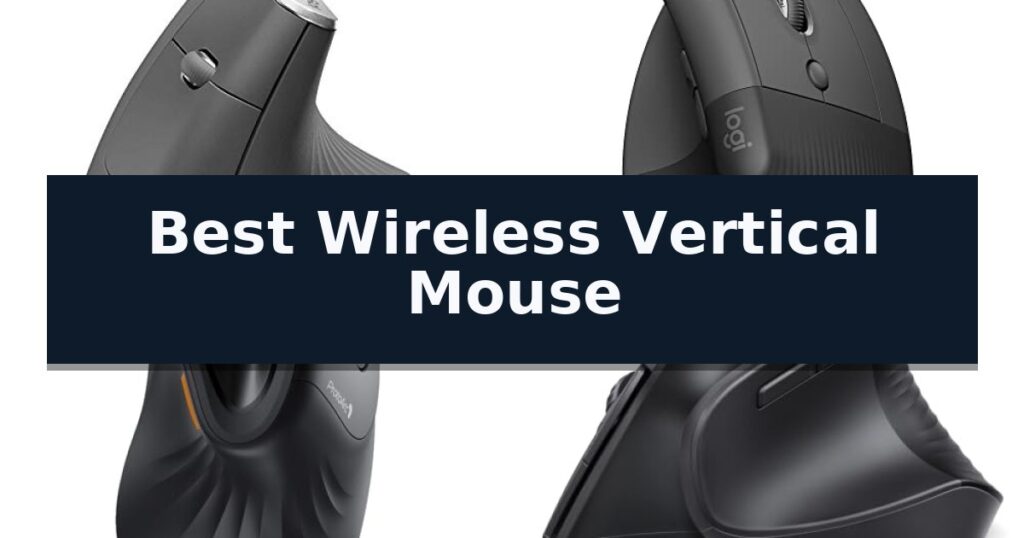
10 Best Wireless Vertical Mouse in 2026 Reviews
Quick Comparison
| Product | Best For | Key Strength | Score |
|---|---|---|---|
| Logitech MX Vertical Wireless Mouse | Best Overall | 57° vertical angle reduces wrist pressure and promotes a natural handshake posture. | 4.9 |
| Logitech Lift Vertical Ergonomic Mouse | Best for Smaller Hand Sizes | 57-degree vertical angle promotes a more natural forearm posture. | 4.6 |
| ProtoArc EM11 NL Vertical Mouse | Compact Rechargeable Productivity | 58-degree vertical angle promotes a natural, strain-reducing wrist posture. | 4.5 |
| UGREEN Ergonomic Wireless Mouse | Smooth Gliding for Large Hands | Natural vertical handshake position reduces wrist strain. | 4.7 |
| Lekvey Rechargeable Vertical Mouse | Long-Lasting Battery Life | Rechargeable 600mAh battery eliminates the need for disposable replacements. | 4.3 |
| Uineer Ergonomic Vertical Mouse | Tri-Mode Connectivity Versatility | Tri-mode connectivity for seamless switching between three devices. | 4.8 |
| Attoe Gaming Vertical Mouse | Programmable Buttons for Gamers | 5-direction thumb rocker for efficient in-game navigation | 4.7 |
| TECKNET Ergonomic Vertical Mouse | High Sensitivity DPI Options | Vertical ergonomic design to reduce wrist strain. | 4.9 |
| Amazon Basics Vertical Wireless Mouse | Reliable Plug-and-Play Simplicity | Ergonomic vertical design promotes a more natural hand and wrist position. | 4.5 |
| Anker Wireless Vertical Mouse | Classic Handshake Posture Design | Promotes a neutral handshake wrist position to reduce strain. | 4.6 |
How We Chose
Selecting the right vertical mouse requires evaluating how specific ergonomic designs translate into long-term comfort. We assess these peripherals by prioritizing the natural handshake angle, sensor precision, and the practical integration of wireless connectivity, ensuring that each recommendation addresses common pain points associated with traditional flat mouse usage.
- Ergonomic geometry and wrist angle
- Hand size compatibility and physical dimensions
- Connectivity options including Bluetooth and 2.4GHz USB
- Battery life and charging convenience
- Button layout and customization capabilities
1 Logitech MX Vertical Wireless Mouse — High-Precision Ergonomic Performance
The Logitech MX Vertical Wireless Mouse utilizes a unique 57° vertical angle designed to promote a more natural handshake position. This specialized orientation aims to reduce muscular activity by 10 percent compared to a standard mouse, while simultaneously lowering pressure on the wrist during extended use.
Engineered with a high-precision 4000 DPI optical sensor, this device allows for significant cursor speed adjustments. The integrated cursor speed switch enables users to toggle between settings instantly, which can result in up to 4x less hand movement compared to a traditional 1000 DPI mouse. This feature is intended to minimize fatigue during repetitive tasks.
The chassis features a textured rubber surface and a contoured shape intended to accommodate a variety of hand sizes and grips. It supports multi-device workflows, allowing users to move content seamlessly between up to three different Windows or Apple computers. The unit is rechargeable and includes a USB receiver for wireless connectivity.
Developed with input from leading ergonomists, the design focuses on improving posture and reducing muscle strain. The inclusion of a dedicated thumb rest further supports the hand in a neutral position, ensuring that the device remains comfortable for long-term operation.
Best for: Users seeking to reduce wrist pressure and muscle strain through an ergonomically optimized, high-precision vertical orientation.
Skip if: Users who prefer a traditional flat mouse profile or those with specific desk space constraints who require a more compact, low-profile pointing device.
- 57° vertical angle reduces wrist pressure and promotes a natural handshake posture.
- 4000 DPI high-precision sensor minimizes required hand movement.
- Multi-computer control allows seamless content movement between three devices.
- Ergonomist-approved design specifically tested to lower muscle strain.
- Non-traditional form factor may require an adjustment period for users accustomed to standard mice.
- Larger physical footprint compared to standard flat-profile mice.
2 Logitech Lift Vertical Ergonomic Mouse — Best for Smaller Hand Sizes
The Logitech Lift Vertical Ergonomic Wireless Mouse distinguishes itself with a unique 57-degree vertical angle, a design choice intended to shift the hand into a more natural, handshake-like position. By reducing forearm pronation compared to traditional flat mice, this orientation aims to alleviate wrist and forearm strain during long hours of desk work. The device is specifically engineered for small to medium-sized right hands, incorporating a soft-textured grip and a dedicated thumb rest to provide consistent support throughout the day.
Beyond its physical form, the mouse prioritizes a quiet and efficient workspace. It features whisper-quiet click buttons and a SmartWheel, which facilitates smooth, distraction-free scrolling. Users can further tailor their experience by customizing four of the six available buttons, allowing for a personalized workflow that matches specific task requirements. These features are housed in a chassis that utilizes certified post-consumer recycled plastic, reflecting a focus on material efficiency.
Connectivity and longevity are central to its utility. The mouse supports dual-mode connectivity via Bluetooth Low Energy or the included Logi Bolt USB receiver, ensuring broad compatibility across Windows, macOS, iPadOS, Chrome OS, and Linux environments. With an impressive battery life of up to two years, it is built to minimize maintenance. Furthermore, the design has been developed and approved according to criteria established by leading ergonomists, providing a verified foundation for its ergonomic claims.
While the vertical shape offers distinct comfort advantages for many, it represents a significant departure from standard mouse ergonomics. Users accustomed to horizontal designs may experience an initial adjustment period. Additionally, because the device is strictly right-handed and optimized for specific hand dimensions, it may not accommodate users with larger hands or those requiring left-handed operation.
Best for: Users with small to medium-sized right hands seeking an ergonomic, vertical orientation to improve wrist and forearm comfort during daily computer use.
Skip if: Users with large hands or those who require a left-handed mouse will find the specific size and orientation constraints of this model unsuitable.
- 57-degree vertical angle promotes a more natural forearm posture.
- Ergo-certified design developed with input from leading ergonomists.
- Whisper-quiet clicks and customizable buttons for a focused workspace.
- Dual connectivity options via Bluetooth or Logi Bolt USB receiver.
- Size-specific design optimized only for small to medium right hands.
- Right-hand orientation prevents use by left-handed individuals.
3 ProtoArc EM11 NL Vertical Mouse — Compact Rechargeable Productivity
Maintaining a natural wrist posture during extended computer use is a primary challenge for many desk workers, and the ProtoArc EM11 NL Wireless Ergonomic Vertical Mouse addresses this through its specific 58-degree vertical design. By encouraging a handshake-like grip, this peripheral helps align the forearm and wrist to reduce strain, making it a specialized tool for those looking to improve their daily comfort.
This mouse is engineered for small to medium hands, specifically those measuring under 7.5 inches in length. It features dual Bluetooth connectivity and a 2.4G USB-A receiver, allowing users to pair and switch between up to three devices simultaneously. The device is powered by a 500mAh rechargeable Li-Ion battery, which is replenished via the included USB-C cable.
Performance is managed through adjustable DPI settings (1000/1600/2400), providing variable sensitivity for different tasks. Productivity is further supported by dedicated back and forward navigation buttons. To maintain a quiet workspace, the left and right mouse buttons are designed for silent clicking, though the scroll wheel and side buttons retain a standard tactile sound.
Transitioning to a vertical orientation requires a brief adjustment period, with a recommended 1-2 week learning curve to adapt to the new grip. While the mouse offers versatile connectivity, users should note that the forward and back buttons are not compatible with Mac OS systems, and the device does not include a USB-C receiver.
Best for: Users with small to medium hands seeking a vertical ergonomic design to reduce wrist strain during multi-device workflows.
Skip if: Users with large hands or those who require fully programmable buttons and Mac-compatible side navigation.
- 58-degree vertical angle promotes a natural, strain-reducing wrist posture.
- Multi-device support allows switching between three connected devices.
- Rechargeable 500mAh battery eliminates the need for disposable batteries.
- Silent click buttons for the left and right switches minimize noise.
- Learning curve requires 1-2 weeks of consistent use to adapt.
- Limited Mac OS compatibility for the forward and back navigation buttons.
4 UGREEN Ergonomic Wireless Mouse — Smooth Gliding for Large Hands
Maintaining a natural wrist position during long hours at a desk is essential for comfort, and the UGREEN Ergonomic Wireless Mouse addresses this by utilizing a vertical handshake design. This orientation is specifically engineered to minimize muscle strain and reduce wrist rotation, making it a functional tool for those seeking a more neutral posture during daily computing tasks.
Performance is driven by a versatile sensor that offers 4 adjustable DPI levels, ranging from 1000 to 4000. This allows users to toggle between precise editing requirements and faster cursor movements for general browsing or gaming. The inclusion of PTFE glide feet ensures that the mouse moves across surfaces with minimal friction, contributing to a smooth and quiet user experience.
Connectivity and productivity are supported through a dual wireless system, providing both 2.4G and Bluetooth options. The mouse is capable of pairing with up to three devices, allowing for seamless switching between a laptop, desktop, or tablet. With its silent-click buttons and a 6-button layout, it is designed to maintain a quiet workspace while providing efficient navigation controls.
Compatibility is broad, supporting Windows, macOS, Linux, ChromeOS, and Android systems. The device is powered by a single AA battery and incorporates a smart sleep mode to help manage energy consumption. Note that this model is specifically sized for medium to large hands, and users should verify their hand size against the provided dimensions to ensure an appropriate fit.
Best for: Users with medium to large hands seeking a vertical ergonomic design for multi-device workflows across various operating systems.
Skip if: Users with small hands or those who prefer a traditional low-profile mouse design will likely find this vertical model uncomfortable or difficult to grip.
- Natural vertical handshake position reduces wrist strain.
- Dual wireless connectivity supports up to 3 devices.
- 4 adjustable DPI levels allow for customized cursor sensitivity.
- Silent-click buttons provide a quiet working environment.
- PTFE glide feet ensure smooth and effortless movement.
- Large form factor is not suitable for users with small hands.
- AA battery power requires periodic replacement compared to rechargeable alternatives.
5 Lekvey Rechargeable Vertical Mouse — Long-Lasting Battery Life
The Lekvey Rechargeable Vertical Mouse is engineered with a distinct vertical orientation that encourages a neutral handshake wrist position. By shifting the hand away from the traditional flat palm-down posture, this design aims to reduce forearm twisting and overall strain during long periods of computer work. For users transitioning from standard mice, this ergonomic shift can be a significant adjustment, though it is specifically intended to provide better support for the wrist and arm.
Power management is handled by a built-in 600mAh rechargeable battery, which removes the need for disposable batteries. On a single full charge, the device is designed to operate for approximately 3 to 4 weeks based on typical daily usage of 8 to 10 hours. To further extend battery life, an integrated auto-sleep mode activates when the mouse is idle. Recharging is performed via the included USB-C cable, ensuring a modern and convenient power solution.
Navigation and control are supported by three adjustable DPI levels, specifically 800, 1200, and 1600, allowing users to toggle sensitivity based on their task requirements. The unit also includes dedicated "Page Back" and "Page Forward" buttons for web browsing efficiency. Connectivity is established through a plug-and-play 2.4G nano USB receiver, which stores conveniently in the base of the mouse when not in use, requiring no additional drivers or Bluetooth pairing.
Compatibility is broad, covering Windows 2000 through 11, Linux, and Mac OS. The device measures 5.0 inches by 3.0 inches by 2.5 inches, making it a suitable fit for users with medium to large hands. While the ergonomic design offers a consistent interface across these platforms, the buttons are non-programmable, which is a trade-off for users who rely on custom software shortcuts for specialized workflows.
Best for: Users with medium to large hands seeking an ergonomic vertical mouse to promote a neutral wrist position during daily office or browsing tasks.
Skip if: Users with small hands or those who require programmable buttons for specialized software workflows.
- Rechargeable 600mAh battery eliminates the need for disposable replacements.
- Ergonomic vertical design promotes a neutral handshake wrist position.
- Plug-and-play connectivity via a 2.4G nano USB receiver.
- Adjustable 3-level DPI sensitivity (800/1200/1600).
- Non-programmable buttons limit customization options.
- Size constraints may not be ideal for users with smaller hands.
6 Uineer Ergonomic Vertical Mouse — Tri-Mode Connectivity Versatility
The Uineer Ergonomic Wireless Vertical Mouse prioritizes user comfort through a specialized vertical orientation designed to keep the wrist straight and the forearm relaxed during extended use. By shifting the hand into a more natural position, this device aims to mitigate the discomfort often associated with traditional mouse designs.
## Best Wireless Vertical Mouse
### 1 Uineer Ergonomic Wireless Vertical Mouse – Tri-Mode Connectivity Versatility
This mouse offers significant flexibility with tri-mode wireless connectivity, supporting Bluetooth 5.0, Bluetooth 4.0, and 2.4GHz USB connections. The three-device switching capability allows users to toggle between different hardware, such as a laptop and a tablet, with ease. For precision tasks, the device features 4-level adjustable DPI settings ranging from 800 to 3200, catering to various workflows from document processing to creative design.
The Uineer Ergonomic Wireless Vertical Mouse is built for quiet environments, utilizing silent left and right buttons to eliminate clicking noise. It includes a side scroll wheel for horizontal navigation and additional forward/back buttons for improved browser and app control. Power is managed by a 500mAh rechargeable battery that supports weeks of typical use, with a Type-C charging port for efficient replenishment.
The device incorporates 7-color LED ambient lighting and a lightweight 105-gram frame. While the ergonomic shape is intended to reduce fatigue, the manufacturer notes that new users may require a 1-2 week adjustment period to become accustomed to the vertical grip.
Best for: Office users and remote workers seeking a comfortable, multi-device compatible mouse to reduce wrist strain.
Skip if: Users who prefer a traditional low-profile mouse or those who are unwilling to commit to an adjustment period for a new ergonomic grip.
- Tri-mode connectivity for seamless switching between three devices.
- Silent buttons suitable for quiet office or library environments.
- 4-level adjustable DPI for customizable cursor sensitivity.
- Rechargeable 500mAh battery eliminates the need for disposable batteries.
- Adjustment period of 1-2 weeks required for new users to adapt to the vertical design.
7 Attoe Gaming Vertical Mouse — Programmable Buttons for Gamers
The Attoe Gaming Vertical Mouse is engineered with a unique 5-direction thumb-operated rocker, designed to replace five traditional keys for enhanced control in fast-paced FPS, MOBA, and MMO titles. By promoting a natural handshake position, this device is specifically crafted to reduce muscle strain and alleviate wrist fatigue during extended computing sessions.
Connectivity is a primary strength of this model, offering tri-mode flexibility that includes dual Bluetooth 5.0, 2.4GHz wireless, and USB-C wired options. Users can easily switch between devices, with clear blue and red indicators providing instant channel recognition for stable performance up to 33 feet.
Customization is handled through 12 programmable buttons that support macro editing via dedicated configuration software. Once programmed, these settings are saved directly to the mouse, ensuring consistent functionality even when moving between different computers. The high-precision PMW3325 sensor powers 5 DPI presets reaching up to 24000 DPI, complemented by side RGB lighting strips with five dynamic effects.
While the software is essential for unlocking the full potential of the programmable buttons, it is designed to be secure and non-intrusive. The mouse is built for durability and long-term support, backed by a 12-month warranty to address potential charging or connection concerns.
Best for: Gamers and professionals seeking an ergonomic vertical design with extensive macro-customization and multi-device connectivity.
Skip if: Users who prefer a traditional horizontal mouse grip or those who require a plug-and-play device without the need for configuration software to access button mapping.
- 5-direction thumb rocker for efficient in-game navigation
- Tri-mode connectivity including Bluetooth, 2.4GHz, and wired USB-C
- 12 programmable buttons with onboard memory for saved macros
- Ergonomic vertical shape to reduce wrist and shoulder strain
- Requires configuration software for full button customization
- Vertical grip style may require an adjustment period for some users
8 TECKNET Ergonomic Vertical Mouse — High Sensitivity DPI Options
Maintaining a natural wrist posture during long work sessions is a primary challenge for many computer users, and the TECKNET Ergonomic Vertical Mouse addresses this by positioning the palm at a near-vertical angle. This design choice is intended to reduce the strain often associated with traditional flat mice, offering a more neutral hand orientation for right-handed users.
Beyond its shape, the device offers significant flexibility through seamless switching between three devices. Users can toggle between connections using Bluetooth 5.0/3.0 or the included 2.4GHz USB-A receiver, which is conveniently stored at the base. This multi-device capability is complemented by 6 adjustable DPI levels, ranging from 800 to 4800, allowing for customized cursor sensitivity across various surface types.
The mouse is engineered for quiet environments, featuring silent left and right click buttons that minimize noise during operation. To preserve battery life, the unit includes an automatic deep sleep mode that activates after 10 to 30 minutes of inactivity. It runs on 2 AAA batteries, and an integrated LED indicator provides a low-battery warning by blinking when power is depleted.
Compatibility is broad, supporting Windows, Mac, Chrome, and Linux operating systems, though users should note that the side buttons are not functional on macOS. The product is backed by a 36-month warranty upon registration, providing long-term support for the hardware.
Best for: Right-handed users who need to manage multiple devices and require a quiet, ergonomic input solution.
Skip if: Left-handed users or those who require full side-button functionality on macOS systems.
- Vertical ergonomic design to reduce wrist strain.
- Multi-device connectivity via Bluetooth and 2.4GHz USB.
- Silent click buttons for quiet operation.
- 6 adjustable DPI levels for precise cursor control.
- Side buttons are incompatible with macOS.
- Right-handed use only design.
9 Amazon Basics Vertical Wireless Mouse — Reliable Plug-and-Play Simplicity
Maintaining a natural wrist position during long work sessions is a primary challenge for desktop users, and the Amazon Basics 6-Button Vertical Wireless Mouse addresses this with a specialized vertical design. By promoting a more neutral hand orientation, this peripheral aims to reduce strain compared to traditional flat mice, making it a practical choice for those spending extended hours at a computer.
This device utilizes advanced 2.4 GHz wireless technology to maintain a reliable connection within a 33-foot radius, ensuring consistent performance across your workspace. It features plug-and-play convenience via a standard USB-A receiver, requiring no complex software installation for compatibility with Windows 7, 8, 10, 11, or later operating systems.
Customization is handled through adjustable DPI settings, allowing users to toggle between 1000, 1200, 1600, and 2400 DPI to suit different tasks and screen sensitivities. The mouse is specifically engineered for right-handed users with medium to large hands, defined as having a palm length greater than 6.7 inches and a width exceeding 3.2 inches.
Power is managed by two AAA batteries, which are included in the box. The unit is designed for efficiency, offering an approximate 4-month battery lifespan under typical usage conditions. With its six-button layout, it provides essential navigation controls in a form factor that prioritizes ergonomic comfort for the specified hand size range.
Best for: Right-handed users with medium to large hands seeking a comfortable, ergonomic vertical mouse for daily office or home computing tasks.
Skip if: Users with small hands or those who prefer a traditional low-profile mouse design will find the vertical orientation and size requirements of this model unsuitable.
- Ergonomic vertical design promotes a more natural hand and wrist position.
- Adjustable DPI settings (1000/1200/1600/2400) allow for customized tracking sensitivity.
- Reliable 2.4 GHz wireless connectivity with a 33-foot range.
- Plug-and-play setup via USB-A receiver for immediate use.
- Right-handed orientation only, excluding left-handed users.
- Specific size requirements (medium to large hands) may not fit all users comfortably.
10 Anker Wireless Vertical Mouse — Classic Handshake Posture Design
Maintaining a neutral wrist and arm position is essential for long-term comfort during extended computer sessions, and the Anker Wireless Vertical Mouse addresses this through a scientifically designed ergonomic structure. By encouraging a natural "handshake" posture, this peripheral aims to reduce the physical strain often associated with traditional, flat-profile mice.
Beyond its ergonomic shape, the device features 800/1200/1600 DPI Resolution Optical Tracking Technology, allowing users to adjust sensitivity based on their specific task requirements. This versatility ensures smooth, precise cursor movement across various surfaces, whether you are navigating complex spreadsheets or browsing the web.
Usability is further enhanced by integrated next/previous buttons, which provide quick navigation shortcuts for web browsers. The mouse is powered by a 2.4 GHz wireless connection via a dedicated USB receiver, and it includes an automatic power-saving mode that engages after 8 minutes of inactivity to conserve battery life.
Measuring 120 by 62.8 by 74.8 mm and weighing 3.4 ounces, the unit is designed for right-handed users. It requires two AAA batteries for operation and comes with an 18-month warranty, providing a reliable solution for those seeking to upgrade their desktop setup with a focus on ergonomic support.
Best for: Users seeking to alleviate wrist strain through a vertical, handshake-style ergonomic design.
Skip if: Left-handed users or those requiring Bluetooth connectivity, as this model is designed for right-handed use and relies on a 2.4 GHz USB receiver.
- Promotes a neutral handshake wrist position to reduce strain.
- Offers adjustable DPI settings (800/1200/1600) for varied tracking precision.
- Includes convenient next/previous buttons for efficient web navigation.
- Features an automatic power-saving mode to extend battery life.
- Requires two AAA batteries which are not included in the package.
- Audible key click sounds are present during operation.
Best Wireless Vertical Mouse Buying Guide
Understanding Vertical Ergonomics
The primary goal of a vertical mouse is to place the forearm and wrist in a neutral, handshake-like position. By rotating the hand away from the flat, pronated position required by standard mice, these devices aim to reduce pressure on the carpal tunnel and minimize forearm muscle strain.
While the 57-degree angle is a common standard, the effectiveness of this design depends heavily on your hand size. A mouse that is too large or too small can force an unnatural grip, potentially negating the ergonomic benefits, so verifying dimensions against your own hand length is a critical first step.
Connectivity and Multi-Device Workflows
Modern wireless vertical mice typically offer dual connectivity via Bluetooth and a 2.4GHz USB receiver. This versatility is essential for users who switch between a desktop computer and a laptop throughout the day, as it allows for seamless transitions without re-pairing.
Some models support simultaneous connection to multiple devices, often with a dedicated button on the bottom to toggle between them. If your workspace involves managing multiple operating systems or machines, prioritize models that explicitly state multi-device switching capabilities to maintain a clean and efficient desk.
Battery Life and Power Management
Power sources for vertical mice generally fall into two categories: built-in rechargeable batteries or replaceable AAA/AA cells. Rechargeable models often feature USB-C charging, which is convenient for those who prefer not to keep spare batteries on hand.
Replaceable battery models can offer months of usage, which is ideal for users who prefer a 'set it and forget it' approach. Regardless of the power type, look for features like auto-sleep modes, which help conserve energy during periods of inactivity and extend the time between charges.
Customization and Productivity Features
Beyond the basic click and scroll, many vertical mice include programmable side buttons that can be mapped to common tasks like page navigation or application shortcuts. These features can significantly improve workflow efficiency, especially for users who spend long hours in web browsers or productivity software.
Keep in mind that software compatibility varies; some mice offer deep customization through proprietary apps, while others provide basic plug-and-play functionality. Check if the specific model supports your operating system, as some advanced button features may be limited on macOS or Linux.
The Adjustment Period
Switching to a vertical mouse is not instantaneous. Most users require a period of one to two weeks to regain their original level of precision and comfort. During this time, it is normal to feel slight fatigue as your muscles adapt to the new movement pattern.
To ease the transition, try to maintain a relaxed grip and avoid over-tensing your hand. As you become accustomed to the vertical angle, the reduction in wrist pressure should become more apparent, making it difficult to return to a traditional flat mouse.
Frequently Asked Questions
How long does it take to get used to a vertical mouse?
Most users find that it takes between one and two weeks of consistent daily use to fully adapt to the vertical grip and regain their previous level of cursor control.
Are vertical mice suitable for gaming?
While vertical mice are designed primarily for office ergonomics, some models feature high DPI sensors and programmable buttons that can be used for casual gaming, though they may not match the specialized performance of dedicated gaming mice.
Do I need special software to use the side buttons?
Many vertical mice offer plug-and-play functionality for basic buttons, but advanced customization often requires downloading the manufacturer's specific software to map functions to your needs.
Can I use a vertical mouse if I have small hands?
Yes, but it is important to select a model specifically designed for smaller hand sizes, such as the Logitech Lift, to ensure you can comfortably reach all buttons and maintain a proper grip.
Do vertical mice work on all surfaces?
Most modern vertical mice use optical sensors that perform well on standard desk surfaces, though performance may vary on glass or highly reflective materials.
Conclusion: Our Top Pick
Our top pick is Logitech MX Vertical Wireless Mouse. Choosing the right vertical mouse is a personal decision that balances ergonomic design with your specific hand size and connectivity requirements. By focusing on the handshake posture and ensuring the device dimensions match your grip, you can significantly reduce daily wrist strain.
Whether you prioritize high-precision sensors or simple, reliable plug-and-play connectivity, the current market offers diverse options to suit any workspace. Take the time to measure your hand and consider your multi-device needs to ensure a comfortable and productive transition.